



Natural Purple Food Coloring and Dye Recipe
Natural Purple Food Coloring Recipe with Blueberries and Food Grade Ethanol
Make your own natural purple food coloring with blueberries, water, and food grade ethanol. This recipe is designed for bakers, frosting makers, candy makers, and DIY food crafters who want a concentrated berry-based purple color made from familiar kitchen ingredients.
Blueberries and blackberries can create a purple to blue-purple liquid color that works well in frostings, glazes, sanding sugar, decorative drinks, and light-colored desserts. Purple color from berries is natural and visually appealing, but it is also sensitive to pH, heat, light, oxygen, and storage time. This guide explains how to make berry-based purple food coloring, how to use it, and why USDA Certified Organic 200 Proof Food Grade Ethanol is used as the starting alcohol for a 50/50 alcohol-water extraction.
Jump to Section
- At a Glance
- Why Make Natural Purple Food Coloring?
- Why Use Food Grade Ethanol?
- Why Blueberries and Blackberries Make Purple Color
- Blueberry Purple Food Coloring Recipe
- How to Use Natural Purple Food Coloring
- Best Uses and Limitations
- Why Purple Can Shift Pink, Blue, or Gray
- Other Natural Purple Coloring Ingredients
- Storage and Shelf Life
- Safety Notes
- Common Questions
- Shop Food Grade Ethanol for Natural Food Coloring
At a Glance
| Item | Recommendation |
|---|---|
| Color | Purple to blue-purple |
| Main ingredient | Fresh blueberries, with blackberries as an optional deeper-color substitute |
| Starting alcohol | USDA Certified Organic 200 Proof Food Grade Ethanol |
| Final extraction strength | Roughly 100 proof when mixed 1:1 with water |
| Prep time | 10 to 15 minutes |
| Steep time | 12 to 24 hours |
| Best uses | Frosting, glazes, sanding sugar, drinks, decorative accents, and light-colored desserts |
| Watch for | pH shift, berry flavor, pulp, oxidation, heat fading, and color dulling |
| Storage | Amber glass bottle or jar, stored cold and dark |
Why Make Natural Purple Food Coloring?
Natural purple food coloring is useful when you want color from recognizable fruits or vegetables instead of a standard artificial dye. Blueberries and blackberries are easy to understand, easy to source, and visually connected to the purple color many bakers and food makers want.
Homemade berry coloring will not behave exactly like commercial purple dye. It may create a softer shade, it can add berry flavor, and it can change depending on the recipe’s pH and storage conditions. That makes it best for recipes where you can test the color first, then add the finished coloring slowly until the shade looks right.
Why Use Food Grade Ethanol?
Blueberries and blackberries get much of their purple color from anthocyanin pigments. These pigments are water-soluble and pH-sensitive, so this recipe uses food grade ethanol mixed with water rather than straight 200 proof ethanol by itself.
The water helps support berry color extraction, while the ethanol helps create a concentrated liquid color that adds less water than berry juice or puree. This can be helpful in frosting, glazes, sanding sugar, and other recipes where too much added water can affect texture.
Starting with 200 proof ethanol gives you control over the final alcohol-water balance. Instead of using vodka, rum, or another beverage alcohol with its own flavor profile, you can mix equal parts USDA Certified Organic 200 Proof Food Grade Ethanol and water to make a simple 50/50 extraction liquid.
Only use food grade ethanol for culinary projects. Do not use rubbing alcohol, denatured alcohol, fuel alcohol, or industrial solvent products in food. If you are comparing alcohol types, read more about denatured alcohol vs. non-denatured food grade ethanol.

Why Blueberries and Blackberries Make Purple Color
Blueberries and blackberries contain anthocyanin pigments, which can appear red, purple, or blue depending on pH and recipe conditions. Blueberries usually create a purple to blue-purple tone, while blackberries can create a deeper purple-red shade.
For best results, use ripe berries with strong color and no mold, fermentation, or soft spoiled spots. Lightly crushing the berries before extraction helps expose the skins and pulp, where much of the useful color is concentrated. Frozen and thawed berries can also work because freezing breaks down the fruit structure and can help release color more easily.
Blueberry Purple Food Coloring Recipe
Ingredients
- 1 cup fresh organic blueberries, lightly crushed
- 1/2 cup, 4 fl oz, about 118 ml USDA Certified Organic 200 Proof Food Grade Ethanol
- 1/2 cup, 4 fl oz, about 118 ml distilled water or neutral-tasting filtered water
Optional Ingredient Swap
- Use 1 cup lightly crushed blackberries for a deeper purple-red color. Strain carefully because blackberries contain seeds and pulp.
Equipment
- 1 clean pint or quart glass jar with an ethanol-compatible lid
- 1 clean amber glass bottle or jar for finished storage
- Fine mesh strainer
- Coffee filter or cheesecloth, optional for clearer finished coloring
- Wooden spoon or clean muddler
- Label and marker
Steps
- Prepare the berries. Wash the blueberries well and remove any stems, leaves, or soft spoiled berries. Let them drain, then lightly crush them with a clean spoon or muddler.
- Mix the extraction liquid. Combine the 200 proof food grade ethanol and water in a clean glass jar. This creates a simple 50/50 alcohol-water solution that is roughly 100 proof for this kitchen recipe.
- Add the berries. Add the crushed blueberries to the jar and stir gently so the fruit is fully moistened.
- Cover the jar safely. Cover tightly with a clean lid suitable for alcohol-water extraction. If using a metal lid, place a small piece of parchment paper between the jar and lid to reduce direct contact.
- Shake and steep. Shake the jar to integrate the berries and liquid. Let the jar sit at room temperature, away from direct sunlight, for 12 to 24 hours. Shake once or twice during steeping if convenient.
- Strain the coloring. Pour the liquid through a fine mesh strainer into a clean glass jar. Press lightly to collect the colored liquid, but avoid forcing too much pulp through the strainer.
- Filter for a smoother finish. For clearer finished coloring, strain again through a coffee filter or cheesecloth.
- Bottle and label. Transfer the finished purple coloring to an amber glass bottle or jar. Label it with the ingredient and date.
- Store cold and dark. Keep the finished coloring tightly sealed in the refrigerator or freezer door, away from light, heat, and open flames.
Important recipe note: Do not leave the berries in the liquid indefinitely. Blueberries have a soft, water-rich texture and can add pulp, cloudiness, and off-flavors if left too long. Strain after 12 to 24 hours for a cleaner finished food coloring.
Color note: Purple color is delicate and can change over time because of oxidation, heat, light, and pH. Use the finished coloring soon after making it for the strongest color transfer.
Flavor note: Blueberries and blackberries can add berry flavor. Test a small amount in your recipe before coloring a full batch.
Need food grade ethanol for this recipe? Start with Culinary Solvent USDA Certified Organic 200 Proof Food Grade Ethanol, then mix it 1:1 with water to create the alcohol-water solution used for berry color extraction. This gives you a clean, neutral starting alcohol without added flavor, sugar, denaturants, or artificial color.
How to Use Natural Purple Food Coloring
Use homemade berry food coloring drop by drop. Stir thoroughly after each addition, then wait a moment before adding more. Natural colors often build more gradually than artificial dyes, and berry purple may shift depending on the food it is added to.
- Buttercream frosting: Add a few drops at a time and mix well. Berry color can shift depending on the frosting’s pH.
- Royal icing: Works best in small test batches where you can check the final shade before decorating.
- Glazes: Use sparingly so the glaze does not become too thin.
- Sanding sugar: Add a few drops to sugar, stir until evenly colored, then spread on parchment and allow the ethanol to evaporate before storage.
- Drinks: Can add a purple tint, but acidity can move the color toward pink or red-purple.
- Baked goods: Test first. Heat and batter color can dull or shift the finished purple shade.
For more kitchen-focused uses of ethanol, see Culinary Solvent’s guide to food grade ethanol for chefs and bakers.
Best Uses and Limitations
| Use Case | Works Well? | Notes |
|---|---|---|
| Buttercream frosting | Yes | Use drop by drop. Berry flavor and pH shift can affect the final result. |
| Royal icing | Yes | Good for light purple decorative work after a small test batch. |
| Sanding sugar | Yes | Let the ethanol evaporate before sealing the sugar for storage. |
| Glazes | Yes | Use carefully so the glaze does not become too thin. |
| Beverages | Maybe | Acidic drinks may shift the color toward pink or red-purple. |
| Cake batter | Maybe | Heat and batter color may soften or gray the final purple shade. |
| Long-baked applications | Limited | Anthocyanin-based colors can fade or shift under extended heat. |
Why Purple Can Shift Pink, Blue, or Gray
Berry-based purple food coloring is pH-sensitive. Acidic ingredients can push the color toward red, pink, or red-purple. More neutral or slightly alkaline conditions may push the color toward blue-purple or blue. Heat, oxygen, and storage time can also dull the color or make it look gray.
For the best color, use the finished coloring in lighter foods, avoid extended high-heat applications when possible, store the bottle cold and dark, and test the color in a small portion of your recipe first.
If your recipe shifts toward blue, you may also find the guide to natural blue food coloring useful. For warmer berry-red tones, see the guide to natural red food coloring.
Other Natural Purple Coloring Ingredients
Blueberries are the lead ingredient for this homemade purple food coloring recipe, but they are not the only natural purple option. Some purple ingredients work best as an alcohol-water extraction, while others are better as a puree, powder, water extract, or pH-controlled preparation.
| Ingredient | Color Range | Best Method | Flavor Impact | Best Uses |
|---|---|---|---|---|
| Blueberries | Purple to blue-purple | Crushed fruit in alcohol-water blend | Mild berry flavor | Frosting, glazes, drinks, decorative use |
| Blackberries | Deep purple to red-purple | Crushed fruit in alcohol-water blend | Stronger berry flavor, seeds, and pulp | Frosting, sauces, glazes, drinks, desserts |
| Purple sweet potatoes | Purple to violet | Cooked, grated, powdered, or water-based preparation | Earthy and mild | Frosting, doughs, fillings, decorative use |
| Red cabbage | Purple, pink, blue, or green depending on pH | Water extraction plus pH control | Cabbage note if strong | Educational color projects, pH-sensitive icing, decorative use |
Purple Sweet Potatoes
Purple sweet potatoes can create purple to violet color and are often useful in doughs, fillings, frostings, and dessert applications where their mild earthy flavor and starch content make sense. They are not a direct one-for-one swap for the blueberry alcohol-water recipe because they behave more like a food ingredient, puree, or powder than a berry juice extract.

Red Cabbage
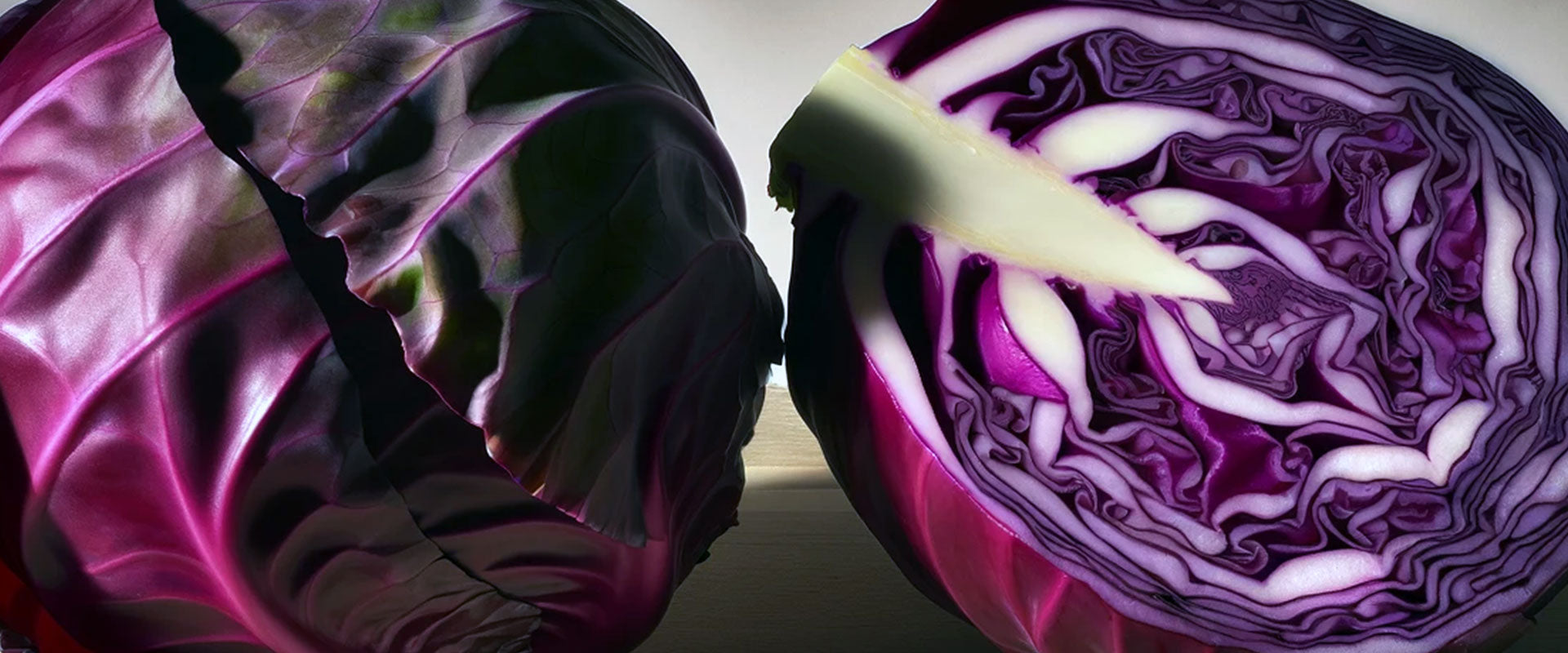
Red cabbage is another anthocyanin-rich ingredient. Its color can range from pink to purple to blue or green depending on pH. It is useful for color experiments and some decorative applications, but it should not be treated as a simple swap for berry-based purple coloring. Too much red cabbage extract can add vegetable flavor.
Storage and Shelf Life
Store finished blueberry food coloring in a clean amber glass bottle or jar with a tight-fitting lid. Keep it cold and dark, such as in the refrigerator or freezer door. Avoid sunlight, heat, oxygen exposure, and loose lids.
Natural purple color is usually best soon after making. Over time, oxidation, light exposure, and recipe conditions can dull or shift the color. Make small batches when possible and discard the batch if you notice mold, off odors, unusual cloudiness, or any sign of contamination.
For more handling guidance, review Culinary Solvent’s page on safe use, handling, and storage of food grade ethanol.
Safety Notes
High-proof food grade ethanol is flammable. Keep it away from heat, flames, stovetops, smoking materials, sparks, and high heat. Use in a ventilated area and keep the bottle closed when not measuring.
Use glass containers and ethanol-compatible lids. Do not cover jars with plastic wrap. If using a metal lid, place parchment paper between the jar and lid to reduce direct contact.
Some alcohol may remain unless the finished coloring is baked, dried, or otherwise allowed to evaporate. Use judgment when serving children, pregnant people, people avoiding alcohol, or anyone with dietary restrictions.
Do not use rubbing alcohol, denatured alcohol, fuel alcohol, or industrial alcohol in food. Food coloring recipes should only be made with alcohol that is appropriate for culinary use.
Common Questions
Can I use blueberry food coloring in frosting?
Yes. Start with a few drops and mix thoroughly. Blueberry color can add berry flavor and may shift depending on the frosting’s pH.
Why use ethanol instead of blueberry juice?
Food grade ethanol can help create a more concentrated color that adds less water than juice or puree. For blueberries, an alcohol-water blend is usually more practical than straight 200 proof ethanol.
Can I use 200 proof ethanol by itself?
This recipe uses 200 proof ethanol as the starting alcohol, then mixes it with water before extraction. A 50/50 alcohol-water blend is more practical for berry color than straight 200 proof ethanol alone.
Can I use blackberries instead of blueberries?
Yes. Blackberries can create a deeper purple-red color and may provide stronger color than blueberries, but they can also bring seeds, pulp, and stronger fruit flavor.
Why did my purple food coloring turn pink or blue?
Anthocyanin colors change with pH. Acidic foods can push the color toward red or pink, while more neutral or slightly alkaline conditions can shift the color toward blue-purple or blue.
Can I bake with purple food coloring?
Maybe. Heat can dull or shift anthocyanin-based colors, so berry coloring is often better for frosting, glazes, sanding sugar, drinks, and decorative finishes than long-baked applications.
Does the alcohol remain in the finished food?
Some alcohol may remain unless the coloring is baked, dried, or otherwise allowed to evaporate. Use judgment when serving people who avoid alcohol.
Can I use purple sweet potatoes instead?
Yes, but they work differently. Purple sweet potatoes are often better as a cooked ingredient, puree, powder, or water-based preparation rather than as a direct substitute for blueberry alcohol-water coloring.
Shop Food Grade Ethanol for Natural Food Coloring
Ready to make your own natural purple food coloring? Start with pure, non-denatured food grade ethanol from Culinary Solvent, then follow the recipe above to create a concentrated berry-based purple color for frosting, glazes, sanding sugar, drinks, and other kitchen projects.
Shop USDA Certified Organic 200 Proof Food Grade Ethanol for natural food coloring, culinary extracts, baking projects, and other kitchen uses.