
Homemade Elderberry Extract Recipe Using Food Grade Ethanol

Elderberry extract is made from the ripe fruit of the elder plant, most commonly species in the Sambucus genus. Elderberries are tart, dark, color-rich fruits with a long history in syrups, wines, jams, cooked juices, and traditional seasonal preparations. Because elderberries require more safety care than many simple botanicals, this recipe begins with cooked, ripe, stem-free berries and then uses 200 Proof Food Grade Ethanol to create a shelf-stable 100 proof extract.
In This Guide:
- What Are Elderberries?
- Elderberry vs. Elderflower Extract
- Traditional Uses and Context of Elderberry
- Safety First: Ripe Berries, No Stems, and Cooking
- How to Select Quality Elderberries
- Preparing Elderberries for Extract
- Why 100 Proof Works Well for Elderberry Extract
- Why This Recipe Uses a Cooked Elderberry Base
- How to Prepare 8 fl oz of 100 Proof Elderberry Extract
- Recipe: Homemade Elderberry Extract
- Ways to Use Elderberry Extract
- Storage and Shelf Life
- Research and References
- Final Thoughts
What Are Elderberries?
Elderberries are the ripe fruit that develops after elderflowers are pollinated and left on the plant. Elderflowers appear first, usually in late spring or early summer, while elderberries ripen later in the season. The two ingredients come from the same general plant group, but they are very different extract materials.
Elderberries are typically dark purple, blue-black, or nearly black when ripe, depending on the species and growing region. They are tart, tannic, deeply colored, and often used in cooked preparations. For homemade extract-making, the berry’s dark color and fruit character are the main focus.
Elderberry vs. Elderflower Extract
Elderberry extract and elderflower extract should be treated as separate recipes. Elderflower captures the blossom. Elderberry captures the fruit. Each plant part has its own preparation method, flavor profile, and solvent needs.
| Elderberry Extract | Elderflower Extract |
|---|---|
| Made from ripe berries | Made from flower clusters |
| Tart, dark berry, tannic, color-rich | Floral, honeyed, aromatic, delicate |
| Best handled as a cooked fruit preparation | Best handled as a delicate flower extraction |
| 100 proof is a practical target | 160 proof or 100 proof depending on the goal |
| Requires strong safety notes about ripe berries, stems, and cooking | Requires careful identification, clean harvest, and stem removal |
Traditional Uses and Context of Elderberry
Elderberries have a long history in food and traditional botanical preparations. They have been used in syrups, jams, preserves, wines, cooked juices, and seasonal herbal recipes. Their deep color and tart flavor make them especially useful in recipes where a dark berry character is desired.
In modern customer-facing language, elderberry should be described carefully. It is fine to say that elderberries have a long history in traditional seasonal preparations and cooked pantry recipes. Avoid saying that homemade elderberry extract treats colds, prevents flu, boosts immunity, fights viruses, reduces inflammation, or cures any condition.
Safety First: Ripe Berries, No Stems, and Cooking
Elderberry requires more safety care than many simple extract ingredients. Use ripe berries only. Remove stems. Do not use leaves, stems, bark, roots, canes, or unripe berries. Do not make a raw whole-plant elder tincture.
Raw or unripe elderberries and other parts of the elder plant can contain cyanide-producing substances that may cause nausea, vomiting, and severe diarrhea. Cooking the berries reduces this risk. Alcohol should not be treated as a substitute for proper plant-part selection and cooking.
This recipe uses a cooked elderberry base for that reason. The berries are simmered first, strained, cooled, and then blended with 200 proof ethanol to reach the target alcohol strength.
How to Select Quality Elderberries
Quality in = quality out. Choose ripe, clean elderberries from a trusted source. If harvesting yourself, confirm the plant identity before collecting and avoid roadsides, sprayed areas, industrial sites, or contaminated soil.
Fresh Elderberries
- Use only ripe berries with full dark color.
- Remove stems carefully before cooking.
- Discard green, pale, red-unripe, moldy, fermented, or damaged berries.
- Avoid leaves, stems, bark, roots, and cane material.
- Rinse the berries and sort them before cooking.
Dried Elderberries
- Buy dried elderberries from a reputable supplier.
- Choose food-grade or herb-grade material intended for culinary or botanical use.
- Inspect for stems, debris, dust, mold, or stale odor.
- Cook dried elderberries before using them in this extract recipe.
Preparing Elderberries for Extract
Fresh elderberries should be removed from stems, rinsed, sorted, and cooked. Dried elderberries should be inspected, simmered, and strained. In both cases, the goal is to create a cooked elderberry liquid that can be cooled and then blended with 200 proof ethanol.
Do not add 200 proof ethanol to a hot elderberry mixture. Let the cooked berry liquid cool completely before blending. High-proof ethanol is flammable, and heating alcohol or adding it to hot liquids creates unnecessary risk.
Why 100 Proof Works Well for Elderberry Extract
Elderberries are fruit, not dried aromatic herbs. They contain water-friendly compounds, fruit acids, color compounds, tannins, and other plant constituents that do not require straight 200 proof ethanol as the final extraction strength. A 100 proof blend gives the finished extract an equal alcohol-and-water foundation, which is a practical fit for a cooked berry extract.
A Food Chemistry study on elderberry extraction reported optimized extraction conditions using 50% ethanol, which is the same alcohol percentage as 100 proof. For a home-scale recipe, this supports 100 proof as a reasonable target for elderberry extract.
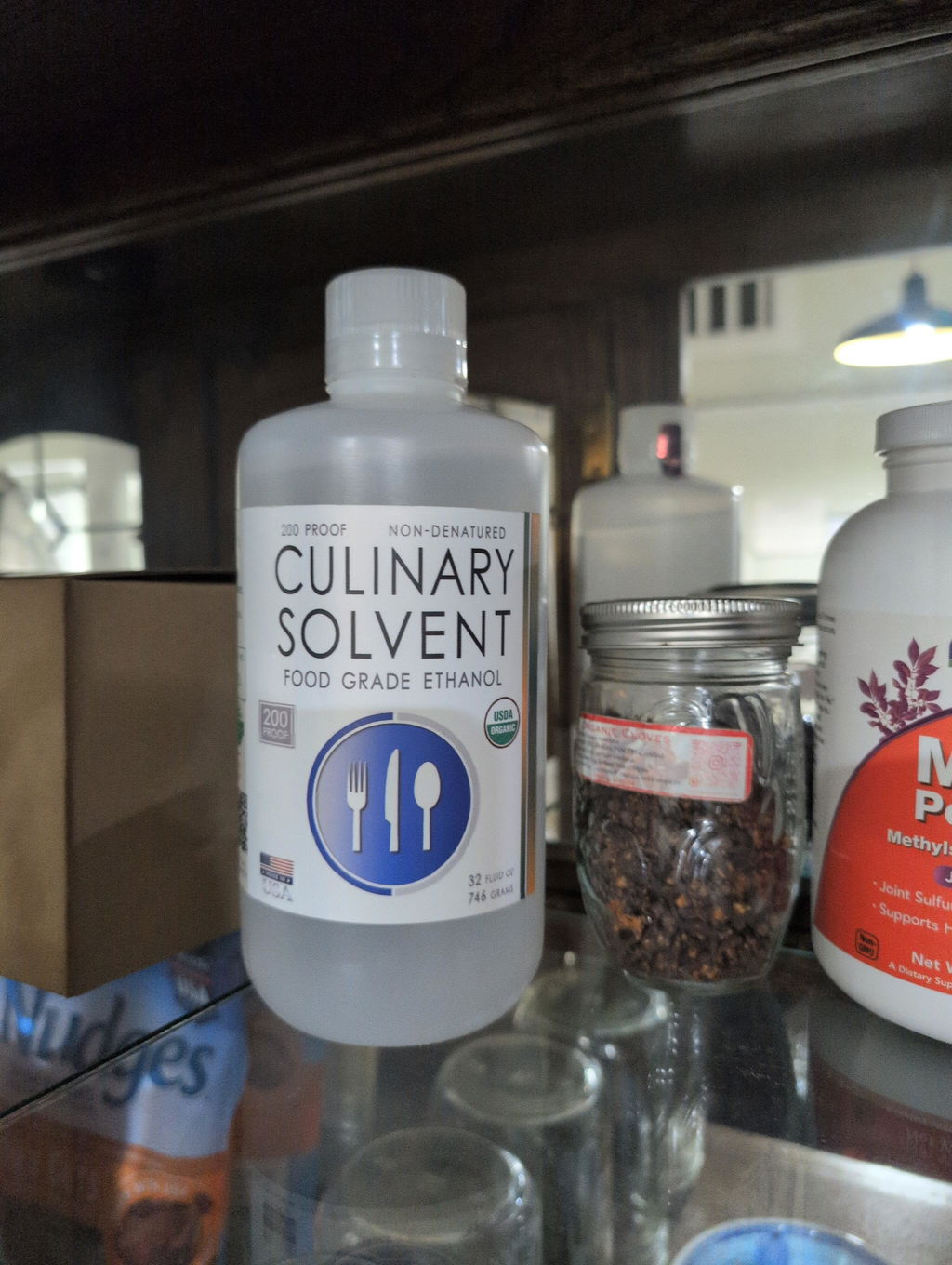
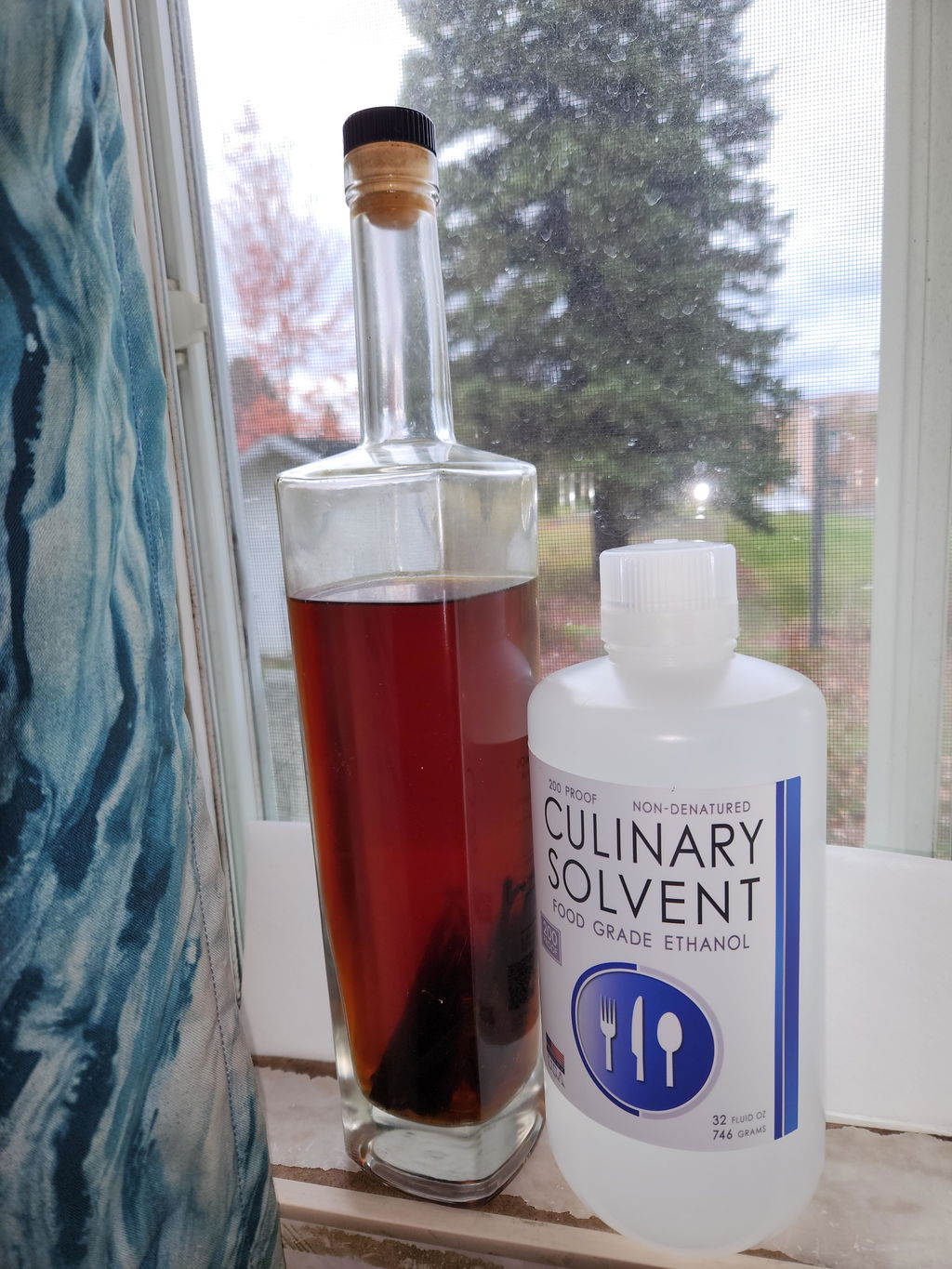
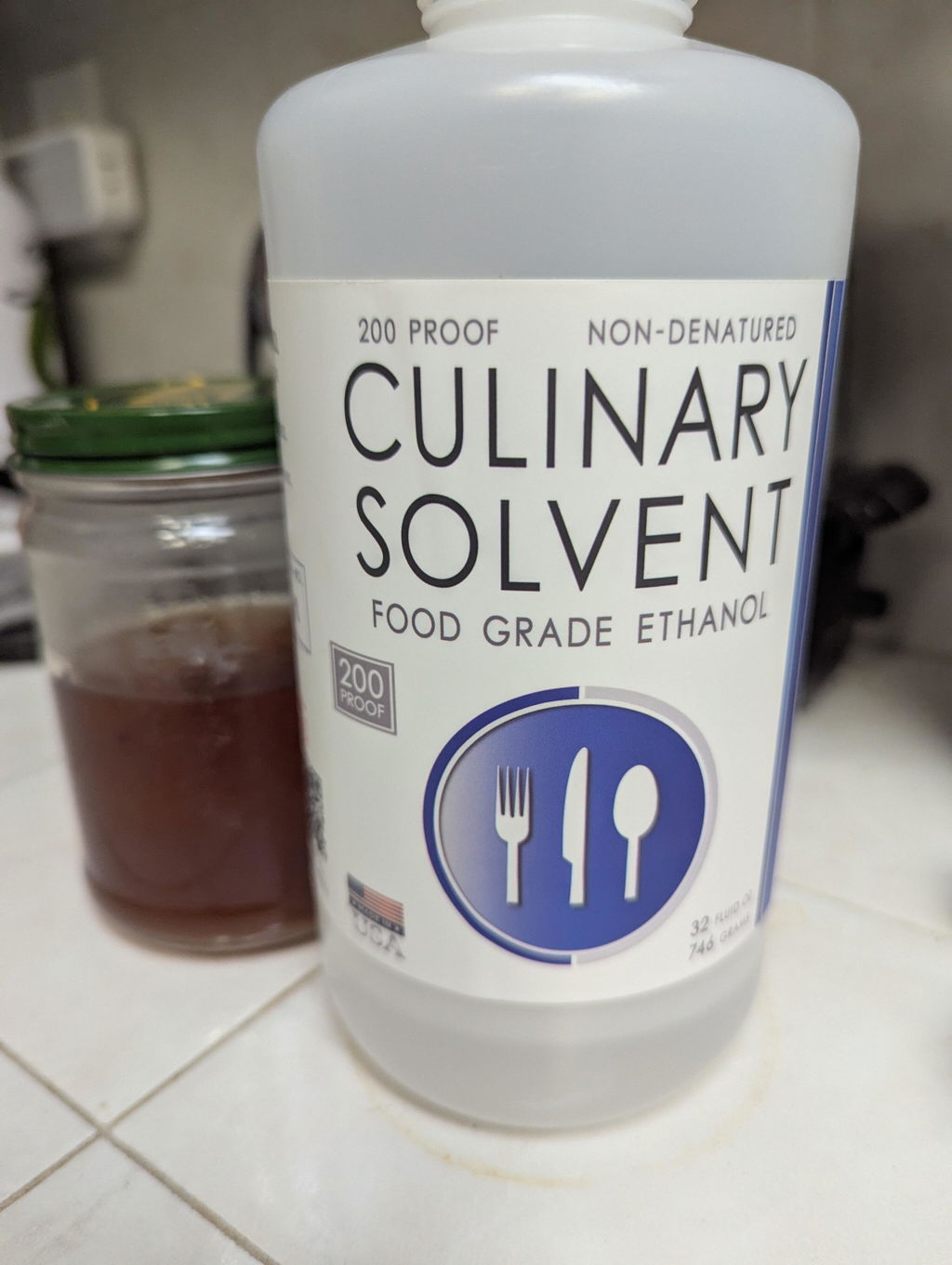
The advantage of starting with 200 Proof Food Grade Ethanol is control. Instead of guessing with vodka or another lower-proof spirit, you can combine a measured amount of cooked elderberry liquid with a measured amount of ethanol to reach the target strength.
Why This Recipe Uses a Cooked Elderberry Base
Many tincture recipes simply place plant material in alcohol and wait. Elderberry deserves a different approach. Because raw and unripe elderberries, stems, leaves, and other plant parts can create safety problems, this recipe begins with cooking ripe, stem-free berries in water.
The cooked method also fits elderberry’s fruit character. Simmering pulls color, tartness, and berry solids into the water. After straining and cooling, 200 proof ethanol is added to preserve and fortify the extract at the desired strength.
How to Prepare 8 fl oz of 100 Proof Elderberry Extract
This recipe uses cooked elderberry liquid as the water portion of the final extract. To prepare approximately 8 fluid ounces of 100 proof elderberry extract, use this blend:
| Ingredient | Amount |
|---|---|
| Cooled cooked elderberry liquid | 4 fl oz |
| 200 Proof Food Grade Ethanol | 4 fl oz |
| Finished amount | Approximately 8 fl oz at 100 proof |
Because cooked elderberry liquid contains dissolved fruit solids, this is an approximate home-scale formulation. For repeatable commercial formulas, measure by weight and verify final alcohol content using appropriate testing methods.
:recipekit:
Recipe: Homemade Elderberry Extract
This recipe uses dried elderberries because they are easy to source, easy to store, and practical for year-round extract making. Fresh ripe elderberries can also be used when properly identified, stemmed, sorted, and cooked.
Ingredients
- 1 oz dried elderberries
- 8 fl oz water for simmering
- 4 fl oz strained, cooled cooked elderberry liquid
- 4 fl oz 200 Proof Food Grade Ethanol
- Clean saucepan with lid
- Fine mesh strainer
- Cheesecloth or paper coffee filter
- Clean glass measuring cup
- Amber glass bottle for storage
- Label and marker
Instructions
- Inspect the dried elderberries and remove stems, debris, or poor-quality material.
- Add 1 oz dried elderberries and 8 fl oz water to a clean saucepan.
- Bring to a gentle simmer.
- Simmer for 20 to 30 minutes with the lid partially covered, stirring occasionally.
- Remove from heat and allow the cooked elderberry mixture to cool slightly.
- Strain through a fine mesh strainer to remove the berries.
- Filter again through cheesecloth or a paper coffee filter if a clearer extract is desired.
- Let the strained elderberry liquid cool completely.
- Measure 4 fl oz of the cooled cooked elderberry liquid into a clean glass measuring cup.
- Add 4 fl oz of 200 Proof Food Grade Ethanol.
- Mix gently and thoroughly.
- Transfer the finished elderberry extract to amber glass.
- Label with the ingredient, date, estimated proof, and preparation method.
Fresh Elderberry Option
For fresh elderberries, use 2 to 3 oz ripe, stem-free elderberries in place of the dried berries. Rinse, sort, and discard unripe or damaged berries before cooking. Simmer with enough water to produce at least 4 fl oz of strained cooked elderberry liquid, then cool completely before adding ethanol.
Important Alcohol Safety Note
Do not heat 200 proof ethanol. Do not add ethanol to a hot elderberry mixture. Keep high-proof alcohol away from open flames, sparks, heat, children, and pets.
Ways to Use Elderberry Extract
Elderberry extract can be used as a tart, dark berry ingredient in small-batch botanical and culinary-style projects. This recipe is focused on extract-making technique, not dosing or medical use.
- Botanical pantry projects
- Syrup-style experiments
- Cooked fruit extract studies
- Beverage flavoring experiments
- Color-rich botanical blending
- Seasonal recipe development
Because this extract contains alcohol, use it only in appropriate adult formulations and label it clearly. Do not use this recipe as a dosing guide, dietary supplement instruction, or medical preparation.
Storage and Shelf Life
Store finished elderberry extract in amber or UV-protective glass with a tight-fitting lid. Keep it away from direct sunlight, sustained heat, open flame, sparks, children, and pets.
Some natural sediment may settle over time because elderberries are fruit-rich and color-rich. Sediment is not automatically a problem, but mold, visible growth, gas buildup, active bubbling, pressure, or off odors are signs that the preparation should be discarded.
For best quality, label the finished bottle with the ingredient, date, estimated proof, berry form used, and preparation method. If the final alcohol content is uncertain, or if you modify the recipe with extra elderberry liquid, store the extract in the refrigerator and use promptly.
For more detailed handling guidance, see Storage tips.
Research and References
The following references were used to guide the safety notes, cooked preparation method, and 100 proof recommendation in this recipe:
- NCCIH: Elderberry Usefulness and Safety
- Oregon State Extension: Play It Safe When Preserving Elderberries
- Food Chemistry: Elderberry extraction parameters using 50% ethanol
- Health Canada: Elder, Sambucus monograph
- Oregon State Extension: Preserving Wild Berries and Fruits
Final Thoughts
Elderberry extract is a useful project when it is approached as a cooked fruit preparation rather than a raw whole-plant tincture. The safest path is to use ripe berries only, remove stems, cook the berry material first, strain carefully, cool completely, and then add measured 200 Proof Food Grade Ethanol to reach the desired final strength.
For this recipe, 100 proof is the practical target. The cooked elderberry liquid provides the fruit character and water portion, while 200 proof ethanol provides the alcohol needed to create a stable, measured extract. Elderflower and elderberry both come from elder plants, but they deserve separate recipes because the flower and fruit behave differently in extraction.
Disclaimer: This content is for informational and educational purposes only. It is not medical advice and does not provide dosing instructions. Use only correctly identified, ripe, stem-free elderberries from a trusted source. Do not use leaves, stems, bark, roots, canes, unripe berries, or raw whole-plant elder preparations. Consult a qualified professional before using botanical preparations for any specific purpose. Keep all high-proof ethanol and finished extracts away from children, pets, heat, sparks, and open flame.