
Homemade White Pine Tincture Recipe

Homemade White Pine Tincture and Extract Recipe Using Food Grade Ethanol
White pine tincture is a classic conifer preparation for herbalists, hands-on DIY enthusiasts, and anyone interested in working with aromatic evergreen ingredients in a shelf-stable form. White pine offers soft green needles, resinous forest aroma, and a long history in traditional seasonal preparations. This guide walks through how to identify and select quality white pine, prepare it for extraction, choose the right proof, and make a clean white pine tincture using food grade ethanol.
In This Guide:
- What Is White Pine?
- Traditional Uses and Context of White Pine
- How to Identify and Select Quality White Pine
- Preparing White Pine for Tincture
- Why High-Proof Food Grade Ethanol Works Well for White Pine
- How to Use 200 Proof Food Grade Ethanol for White Pine Tincture
- Recipe: Homemade White Pine Tincture
- Storage and Shelf Life
- Final Thoughts
What Is White Pine?
White pine (Pinus strobus), also known as Eastern white pine, is a tall evergreen conifer native to eastern North America. It is commonly identified by its long, soft needles grouped in bundles of five, its straight growth habit, and its fresh evergreen aroma. The needles are the easiest and most practical part for most home tincture makers to use.
White pine can also include resin-rich material, young tips, small twigs, and inner bark from responsible pruning or storm-fallen branches. Each part contributes something slightly different. Needles bring a bright green evergreen character. Young tips and small twigs add deeper forest notes. Resinous material can add a stronger pine aroma and a more robust conifer profile.
Traditional Uses and Context of White Pine
White pine has a long history in traditional botanical preparations, especially in regions where the tree grows naturally. Historically, white pine needles, bark, resin, and young twigs have been used in seasonal preparations, teas, poultices, and other forest-based remedies. These uses are best understood as traditional and cultural context rather than modern medical claims.
White pine can be described as a traditional evergreen ingredient associated with seasonal herbal work, respiratory-season folk preparations, aromatic forest remedies, and topical salve traditions. Avoid presenting white pine tincture as a treatment for coughs, colds, wounds, infections, inflammation, or any disease condition. A better and more accurate focus is its aromatic, resinous character and its long-standing role in traditional conifer preparations.
Because white pine is a resinous, sap-influenced ingredient, it can also be helpful to think of it alongside other sap and resin ingredients when deciding how to prepare it for extraction.
How to Identify and Select Quality White Pine
Accurate identification matters. White pine needles grow in bundles of five, which is one of the most useful identifying features. The needles are usually soft, flexible, and bluish-green to green. The tree has a clean evergreen aroma when the needles are crushed.
Harvest only from trees you can confidently identify. Avoid ornamental evergreens, unknown conifers, roadside trees, sprayed landscapes, and any tree growing near industrial contamination. Do not confuse white pine with toxic lookalikes such as yew. If you are not fully confident in the identification, do not use the plant material.
Choose healthy green needles with a fresh evergreen aroma. Avoid yellowing, brittle, moldy, or visibly damaged material. Spring and early summer growth can be especially appealing because the younger material is often tender and aromatic. Quality in = quality out.
If using bark or resin-rich material, avoid stripping bark from a living tree. Removing bark can injure or kill the tree. Use small twigs, storm-fallen branches, pruning material, or responsibly gathered resin instead.
Preparing White Pine for Tincture
Rinse harvested material lightly if needed and allow surface moisture to dry before it goes into the jar. Chop or snip the needles into shorter pieces to increase surface area. If using small twigs or young tips, cut them into manageable sections. Smaller pieces allow the ethanol to contact more of the plant material and can improve the finished extraction.
White pine behaves differently from delicate flowers or juicy fresh herbs because it contains more resinous and structural material. Keep the jar loosely packed so the alcohol can move around the plant material. Do not pack the jar so tightly that the ethanol cannot circulate.
If you want more general background on handling fresh plant ingredients, see this guide to fresh ingredients.
Why High-Proof Food Grade Ethanol Works Well for White Pine
White pine is a good candidate for high-proof ethanol because the needles, young tips, twigs, and resinous components contain aromatic compounds that benefit from a strong solvent. High-proof ethanol helps capture white pine’s fresh evergreen aroma and resin-forward character in a shelf-stable preparation.
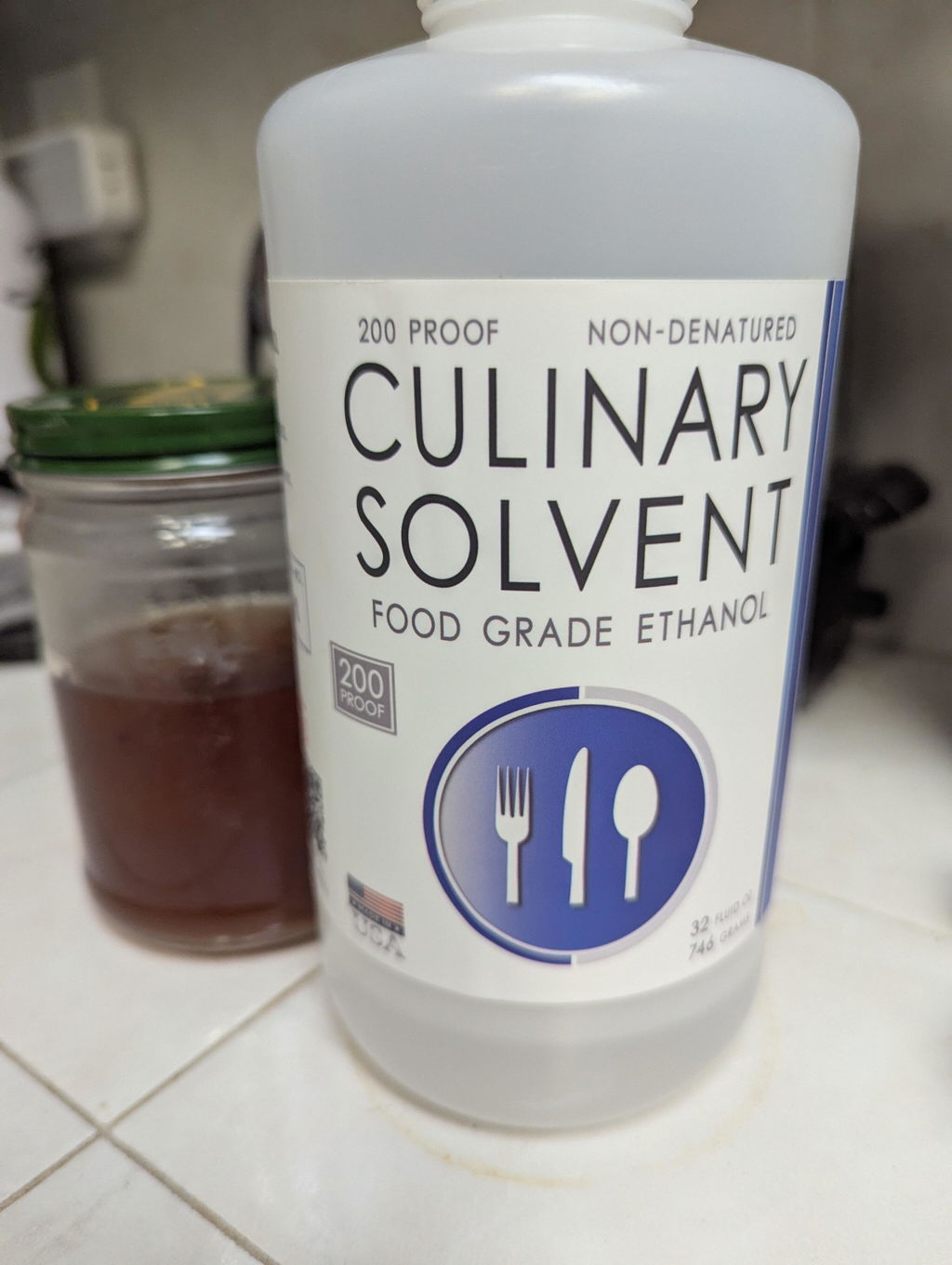
200 Proof Food Grade Ethanol can be diluted to the desired final proof before it is added to the prepared white pine. Starting with 200 proof gives the maker flexibility to create a stronger resin-forward extract or a more balanced hydroalcoholic preparation.
How to Use 200 Proof Food Grade Ethanol for White Pine Tincture
When starting with 200 Proof Food Grade Ethanol, dilute it before adding it to the white pine if you want a final proof below 200. For fresh white pine needles and resinous material, 190 proof creates a bold extract, while 140 to 160 proof can provide a more balanced hydroalcoholic option.
| Target Strength | 200 Proof Ethanol | Water | Finished Amount | Best Use |
|---|---|---|---|---|
| 95% ABV / 190 Proof | 7.6 fl oz | 0.4 fl oz | 8 fl oz | Bold, resin-forward white pine extract |
| 80% ABV / 160 Proof | 6.4 fl oz | 1.6 fl oz | 8 fl oz | Strong aromatic extraction with a little more water content |
| 70% ABV / 140 Proof | 5.6 fl oz | 2.4 fl oz | 8 fl oz | Balanced extract for needles, young tips, and mixed fresh material |
Use clean water when diluting high-proof ethanol. Add the water and ethanol slowly, mix well, and keep the mixture away from open flames, sparks, heat, and ignition sources. Mixing alcohol and water may generate mild heat, especially when working with very high-proof ethanol.
Recipe: Homemade White Pine Tincture
Making your own white pine tincture allows you to preserve the aromatic and resinous qualities of this classic evergreen in a concentrated, shelf-stable form. This recipe uses a simple beginner-friendly ratio and can be adjusted based on how strong, green, or resin-forward you want the finished extract to be.
Ingredients
- 1 oz chopped fresh white pine needles, young tips, small twigs, or a balanced mix
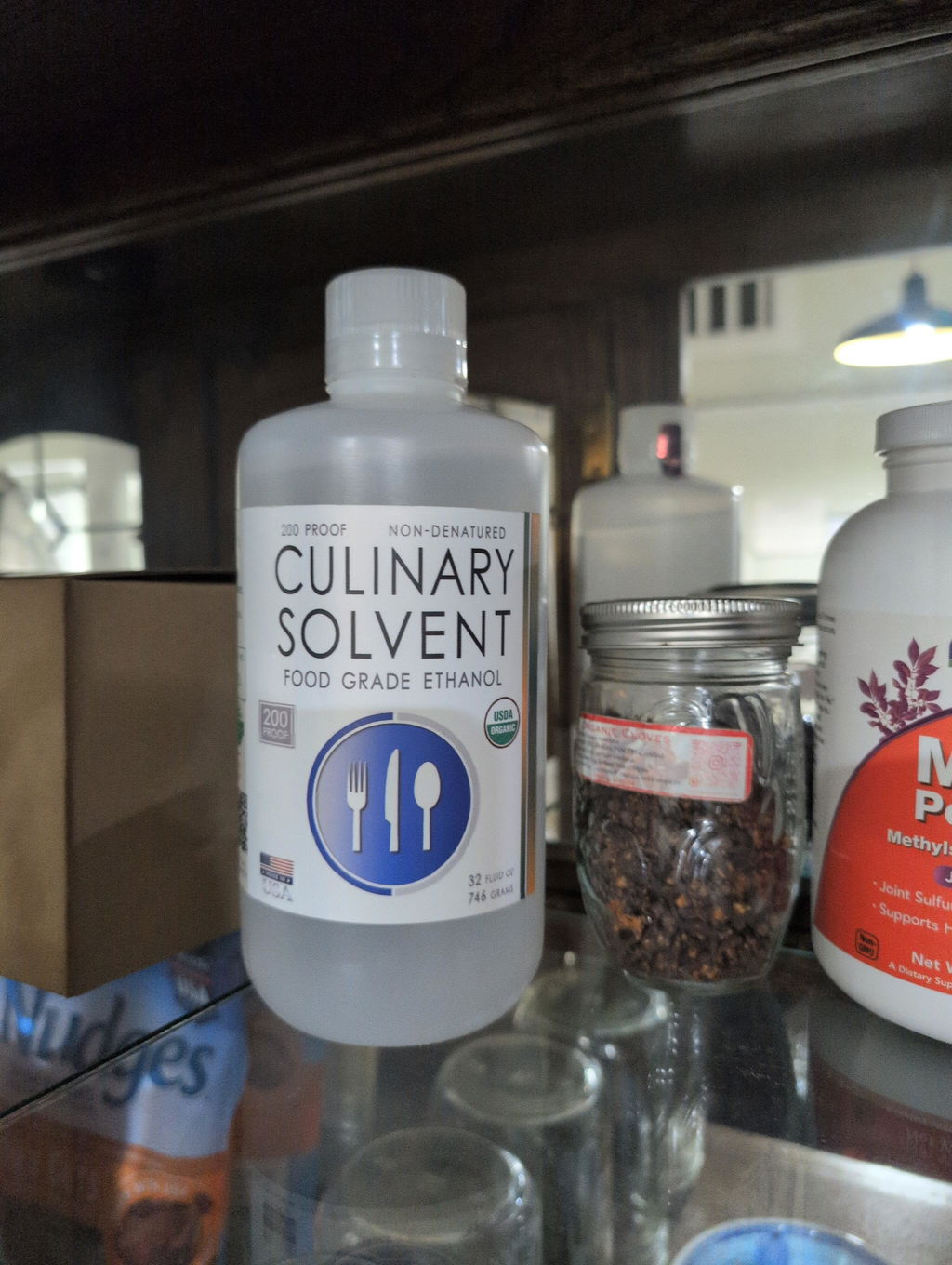
- 8 fl oz USDA Certified Organic 190 Proof Food Grade Ethanol
- Clean glass jar with tight-fitting lid
- Fine mesh strainer, cheesecloth, or tincture press
- Amber glass bottle for storage
- Label and marker
Instructions
- Confirm the plant material is correctly identified as white pine before harvesting.
- Harvest healthy green needles, young tips, or small twigs from a clean location away from roadways, treated lawns, and contaminated areas.
- Rinse lightly if needed, then allow the surface moisture to dry.
- Chop or snip the white pine into shorter pieces to increase surface area.
- Place the prepared white pine into a clean glass jar.
- Pour 8 fl oz of USDA Certified Organic 190 Proof Food Grade Ethanol over the plant material until fully covered.
- Seal the jar tightly and label it with the ingredient, proof, date, and ratio used.
- Store the jar out of direct sunlight during maceration.
- Shake gently once per day or every few days.
- Let the tincture steep for about 2 to 4 weeks, depending on how strong and resin-forward you want the finished result.
- Strain the finished tincture through a fine mesh strainer, cheesecloth, or tincture press.
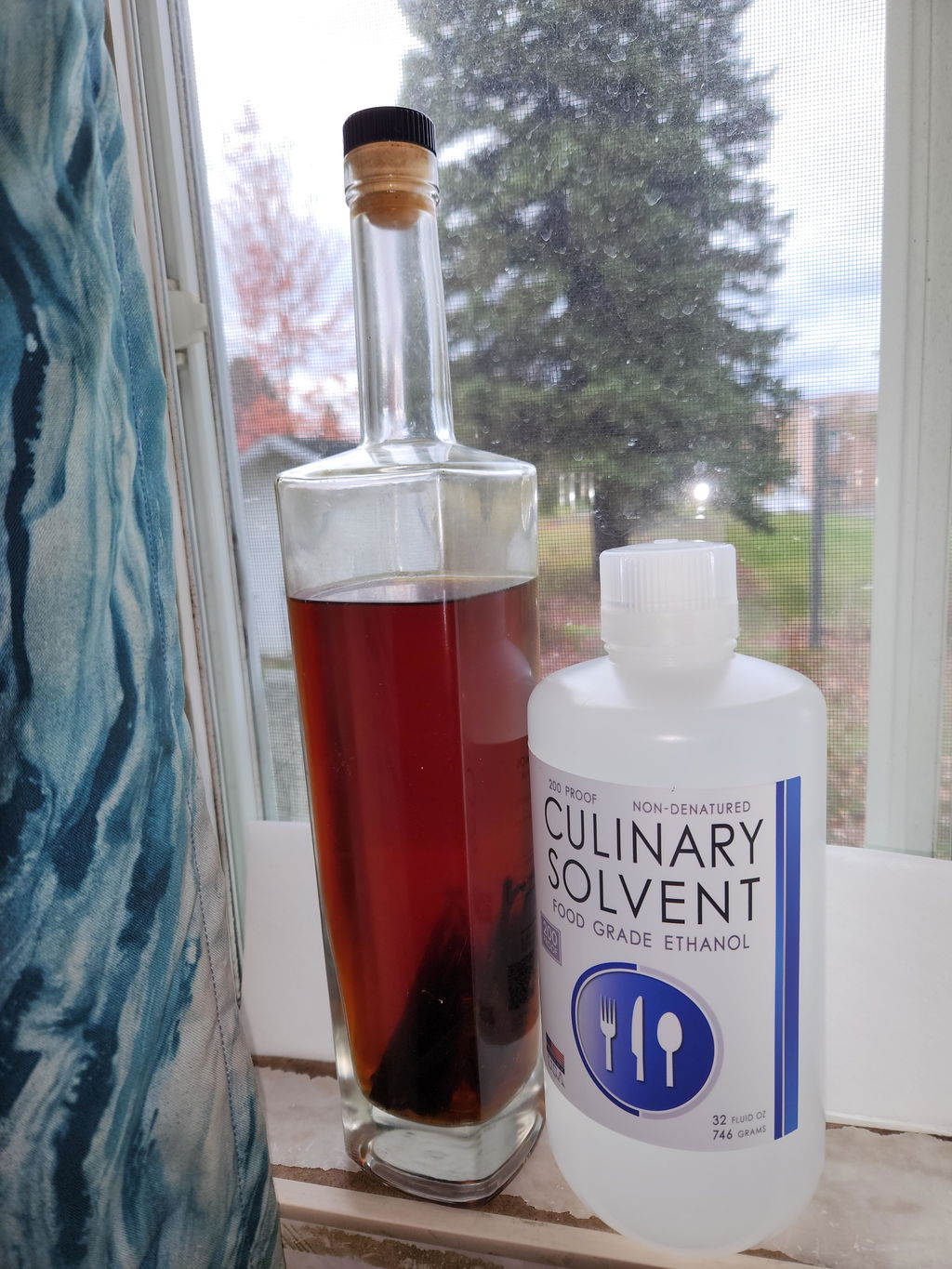
- Transfer the strained tincture to amber glass bottles and label clearly.
Optional stronger batch: For a more concentrated extract, increase the amount of white pine while keeping the alcohol amount the same. Make sure all plant material remains fully covered by ethanol throughout maceration.
Using 200 proof instead: If starting with 200 Proof Food Grade Ethanol, dilute to your desired final proof first using the table above, then use 8 fl oz of the diluted ethanol-water blend in place of the 190 proof ethanol.
This kind of forest-derived tincture can also be interesting to readers exploring other projects in the Recipe Directory.
:recipekit:
Storage and Shelf Life
Clear glass is acceptable during maceration if the jar is kept out of direct sunlight. For longer-term storage, transfer the finished tincture to amber or UV-protective glass and keep it away from sustained heat, sunlight, open flame, and ignition sources.
Straining is recommended once the tincture reaches the aroma and strength you want. Some makers prefer to leave the marc in the menstruum for a longer extraction, but the flavor can become stronger, sharper, or more resin-heavy over time. Label the finished bottle with the ingredient, proof, date made, and plant part used.
Properly prepared and stored white pine tincture can maintain quality over time, though aroma and flavor may slowly change. Discard any preparation that develops unexpected cloudiness, off odors, visible growth, pressure buildup, or other signs of spoilage. For more detailed handling guidance, see Storage tips.
Final Thoughts
White pine is a distinctive evergreen ingredient with a long traditional history and a resinous, aromatic profile that makes it well suited for tincture-making. Good identification, clean harvesting, careful preparation, and the right proof all play a role in the final result.
For the simplest recipe, USDA Certified Organic 190 Proof Food Grade Ethanol gives makers a direct, ready-to-use option for a bold evergreen extract.
The best way to think about white pine tincture is as a seasonal forest extract that captures the fresh, resinous character of white pine in a shelf-stable form. When you are ready to begin, choose the food grade ethanol option that best matches your recipe and final proof.

Disclaimer: This content is for informational and educational purposes only. Consult a professional before using tinctures for any specific application. Individual reactions may vary. Harvest only plants you can positively identify, and do not use white pine preparations if you have known allergies or sensitivities to pine or related evergreen materials.