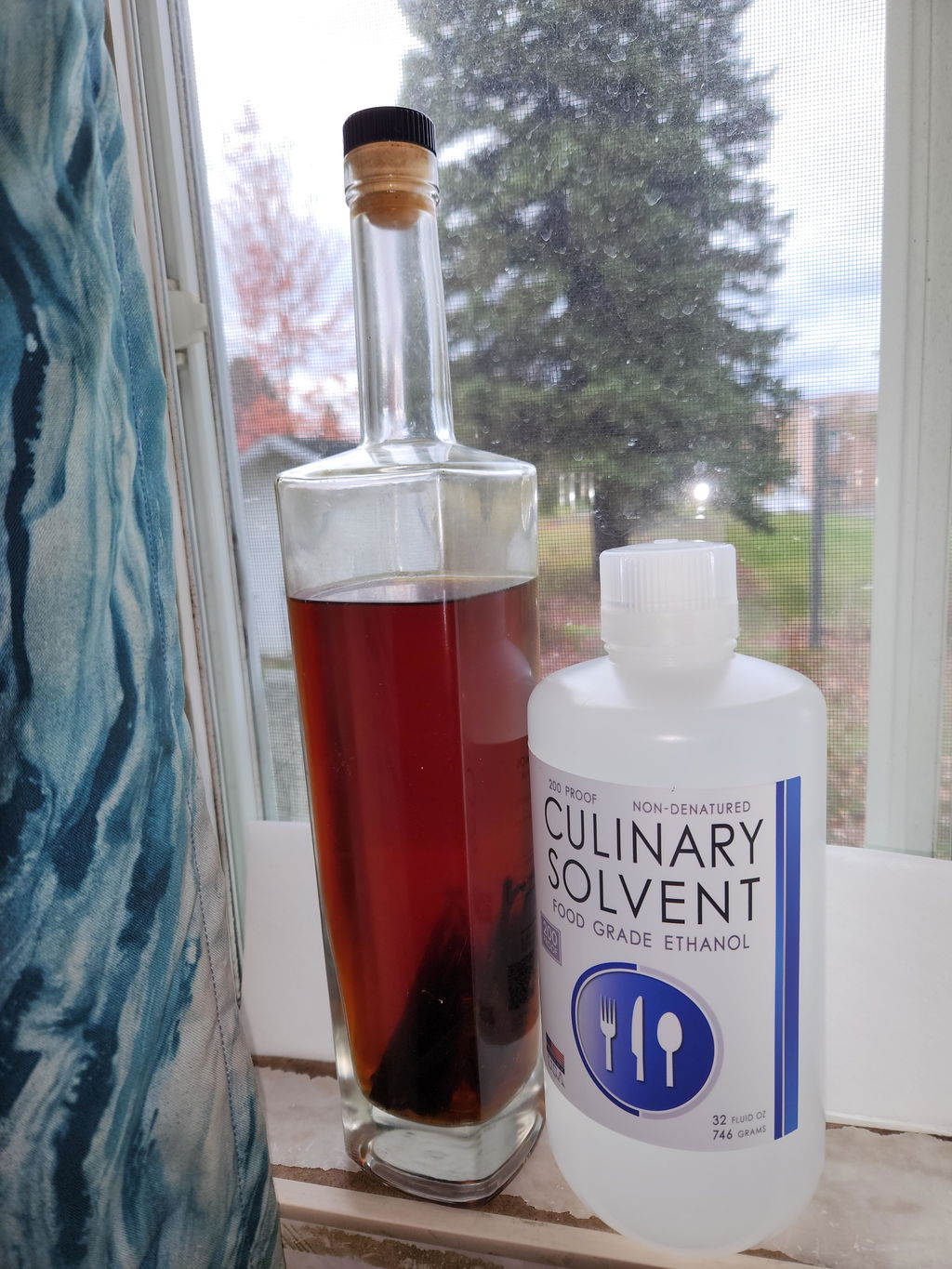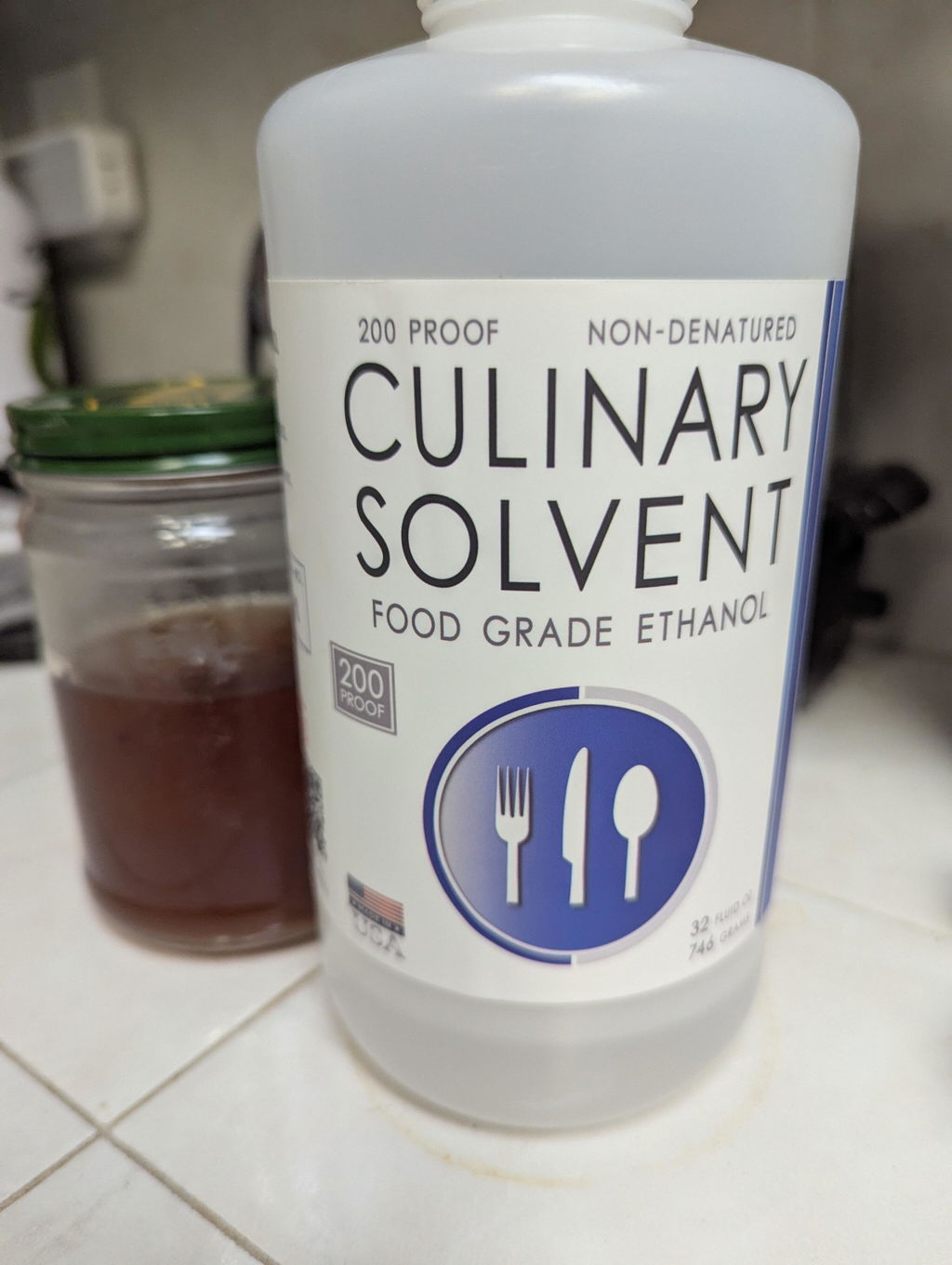

Homemade Juniper Tincture and Extract Recipe

Juniper berries are aromatic, piney, slightly peppery botanicals best known for their role in gin and savory cooking. A homemade juniper berry tincture or extract captures that resinous evergreen character in a liquid form that can be used in culinary, botanical, and DIY extract projects.
This guide explains how to make a juniper berry tincture using dried Juniperus communis berries and a 140 proof ethanol-water menstruum prepared from USDA Certified Organic 200 Proof Food Grade Ethanol. Juniper berries are rich in aromatic essential oils and resinous compounds, so they need a stronger menstruum than many leafy herbs. For this recipe, 200 proof ethanol is diluted to 140 proof before extraction.
What is Juniper Berry?
Juniper berries come from Juniperus communis, a hardy evergreen conifer. Although they are commonly called berries, they are actually fleshy seed cones. When dried, they have a dark blue-purple to nearly black color, a waxy bloom, and a strong evergreen aroma.
For tincture making, the relevant plant part is the berry-like cone. Juniper berries contain aromatic essential oils, resinous constituents, tannins, sugars, organic acids, and other compounds. Their piney and peppery character comes largely from volatile oil constituents, which is why juniper berries call for a higher-proof menstruum than many water-forward herbs.
Why Make Juniper Berry Tincture or Extract?
A juniper berry tincture gives you a liquid way to work with the strong aroma and flavor of this classic botanical. Dried juniper berries are useful whole or crushed, but a tincture makes the flavor easier to measure, blend, and store for culinary and botanical projects.
Juniper has a long history in traditional botanical preparations, brewing, culinary seasoning, and aromatic use. It is also well known as the defining botanical flavor in gin. This history is included for background only and is not a medical claim.
For herbalists, apothecaries, chefs, and DIY makers, juniper berry is a helpful example of why proof selection should match the ingredient. Its aromatic and resinous profile benefits from a strong ethanol presence, while some water in the menstruum helps round out the extraction.
Where Does Juniper Grow?
Juniperus communis has a wide native range across the subarctic and temperate Northern Hemisphere. It may grow as a low spreading shrub or as a small tree, depending on climate, exposure, and local conditions.
Juniper berries used for tinctures are usually purchased dried from herb suppliers, spice sellers, apothecaries, or culinary ingredient suppliers. If foraging, correct identification is essential because not every juniper species is appropriate for food or botanical preparation. Use a qualified local expert, regional field guide, or trusted botanical source before harvesting wild juniper.

Sourcing and Selecting Quality Juniper Berries
Choose juniper berries from a reputable culinary spice supplier, herb supplier, apothecary, or botanical ingredient seller. Look for material identified as Juniperus communis. The berries should be dry, aromatic, and dark blue-purple to nearly black, often with a pale waxy bloom.
Good dried juniper berries should smell fresh, piney, resinous, and slightly peppery. Avoid berries that smell musty, dusty, stale, smoky in an unpleasant way, or flat. Also avoid material with visible mold, excess debris, or uncertain species identification.
For most home tincture recipes, dried juniper berries are easier to source, easier to weigh, and easier to store than fresh berries. This main recipe uses dried berries for that reason.
Preparing Juniper Berries for Extraction
Dried juniper berries should be lightly crushed before extraction. Crushing breaks the outer cone surface and helps the menstruum reach the aromatic oils and resinous compounds inside. A mortar and pestle, rolling pin, spice grinder used briefly, or the back of a spoon can work.
Do not grind the berries into a fine powder unless you are prepared for slower straining and more sediment. Coarsely crushed berries are usually easier to work with and produce a cleaner finished tincture.
Choosing the Right Menstruum
The menstruum is the liquid used to extract compounds from the plant material. For juniper berries, the recommended menstruum is 140 proof, or 70% ABV.
This higher-proof menstruum is useful because juniper berries contain essential oils and resinous compounds that need a strong ethanol presence. Water still plays a role by helping extract water-friendly constituents such as sugars, tannins, organic acids, and flavonoid glycosides. The result is a strong ethanol-forward blend that still includes enough water to broaden the extraction.
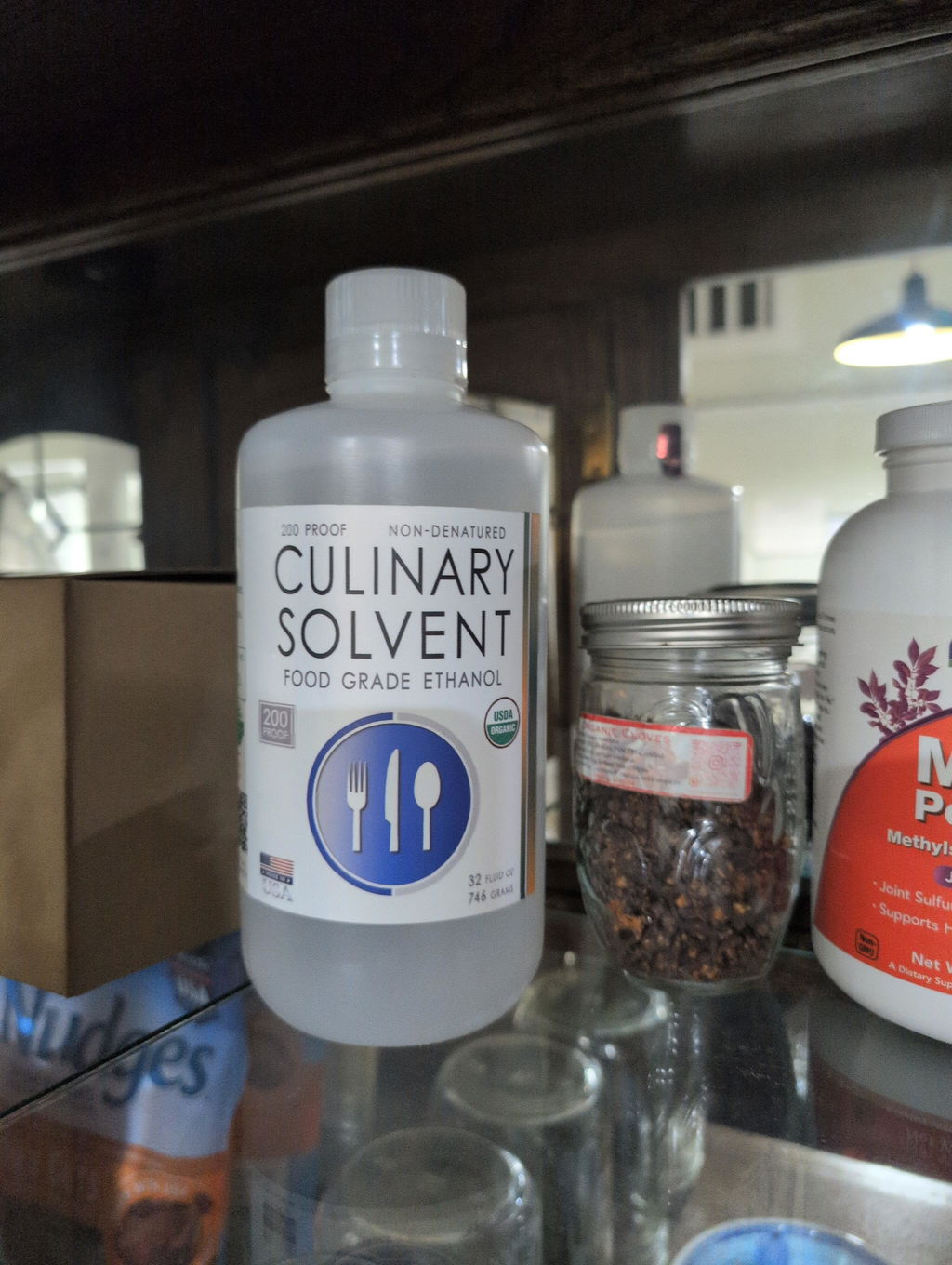
Starting with USDA Certified Organic 200 Proof Food Grade Ethanol gives you a clean high-proof starting point that can be diluted accurately to the target strength. For more help with dilution, see this guide to dilute your 200 proof ethanol for tincture recipes.
Why 140 Proof Works for Juniper Berry
140 proof, or 70% ABV, works well for juniper berries because it gives the finished menstruum enough ethanol strength to extract aromatic, resinous, oil-forward compounds while still including water for a more complete botanical extraction.
Using 200 proof ethanol undiluted would make the extraction more alcohol-heavy than needed for this ingredient. Using a much lower proof could weaken extraction of the berry’s piney, resinous aromatic character. A 140 proof menstruum gives juniper berry a strong solvent while still keeping the recipe balanced.
Recommended Ingredient-to-Menstruum Ratio
The recommended juniper berry tincture ratio is 1:5. That means 1 part dried juniper berries by weight to 5 parts finished menstruum by volume. For an 8 fl oz batch, use 1.6 oz dried juniper berries by weight.
| Ingredient State | Plant Part | Ratio | Amount for 8 fl oz Menstruum | Target ABV |
|---|---|---|---|---|
| Dried | Berry-like seed cone | 1:5 | 1.6 oz dried juniper berries by weight | 70% ABV, 140 proof |
The ratio applies to finished menstruum volume, not ethanol volume alone. For this recipe, the finished 8 fl oz menstruum is made from 5.6 fl oz of 200 proof ethanol plus 2.4 fl oz of water.
How to Prepare 8 fl oz of 140 Proof Menstruum
To make 8 fl oz of 140 proof menstruum from 200 proof food grade ethanol, combine 5.6 fl oz of 200 proof ethanol with 2.4 fl oz of water. This produces 8 fl oz of 70% ABV menstruum before the juniper berries are added.
| Final Menstruum Volume | Target Strength | 200 Proof Food Grade Ethanol | Water |
|---|---|---|---|
| 8 fl oz | 140 proof, 70% ABV | 5.6 fl oz | 2.4 fl oz |
Measure carefully and mix the ethanol and water before adding the menstruum to the crushed berries. Use clean water suitable for food preparation. When ethanol and water are mixed, the liquid may warm slightly and the final volume can contract a little. For small home tincture batches, careful measuring remains a practical approach.
Recipe Execution
Ingredients
- 1.6 oz dried juniper berries by weight, coarsely crushed
- 5.6 fl oz USDA Certified Organic 200 Proof Food Grade Ethanol
- 2.4 fl oz water
Equipment
- Clean glass jar with a tight-fitting lid
- Kitchen scale
- Liquid measuring tools
- Mortar and pestle, rolling pin, or spoon for crushing berries
- Stirring utensil
- Fine mesh strainer, reusable filter bag, or coffee filter
- Amber glass bottle for finished storage
Steps
- Weigh 1.6 oz of dried juniper berries.
- Coarsely crush the berries to open the outer surface without turning them into powder.
- Measure 5.6 fl oz of 200 proof food grade ethanol.
- Measure 2.4 fl oz of water.
- Combine the ethanol and water to make 8 fl oz of 140 proof menstruum.
- Place the crushed juniper berries into a clean glass jar.
- Pour the 140 proof menstruum over the berries until the plant material is fully covered.
- Seal the jar tightly and shake gently.
- Store the jar in a cool, dark place during maceration.
- Shake the jar periodically to keep the berries in contact with the menstruum.
- After maceration, strain through a fine mesh strainer, reusable filter bag, or coffee filter.
- Transfer the finished tincture to amber glass and label it with the ingredient, ratio, proof, and date.
:recipekit:
Storage Best Practices
Store finished juniper berry tincture in amber or other UV-protective glass, away from heat and direct sunlight. A cool cabinet or pantry is a good choice. Keep the bottle tightly sealed to reduce evaporation and limit air exposure.
Clear glass can be used during maceration if the jar is kept away from sunlight. For finished storage, amber glass is preferred. Some sediment may settle in the bottle over time, especially if the berries were crushed finely. Let the bottle sit upright and decant carefully if you want a clearer pour.
For more information about safe handling and storage, see these Storage tips for food grade ethanol.
Final Thoughts
Juniper berry is a useful example of why aromatic berries and seed cones should not automatically be handled like leafy herbs. Juniper’s piney, resinous profile benefits from a stronger ethanol presence, which is why this recipe uses a 140 proof menstruum prepared from 200 proof food grade ethanol and water.
For the most practical home recipe, use dried, coarsely crushed juniper berries at a 1:5 ratio with 8 fl oz of finished 140 proof menstruum. With clean botanical material, careful dilution, and proper storage, homemade juniper berry tincture can be a useful addition to culinary, botanical, and DIY extract projects.
Disclaimer: This content is for informational and educational purposes only. No medical claims are made regarding juniper berry tincture or juniper berry extract. Do not use this article as dosage guidance. Consult a qualified professional before using juniper berry tincture for wellness purposes, especially if pregnant, nursing, managing kidney concerns, or taking medications. Individual reactions, sensitivities, and allergies may vary.
Shop Food Grade Ethanol for Juniper Berry Tincture
Ready to make homemade juniper berry tincture? Start with USDA Certified Organic 200 Proof Food Grade Ethanol from Culinary Solvent and dilute it to 140 proof for this juniper berry extraction recipe.