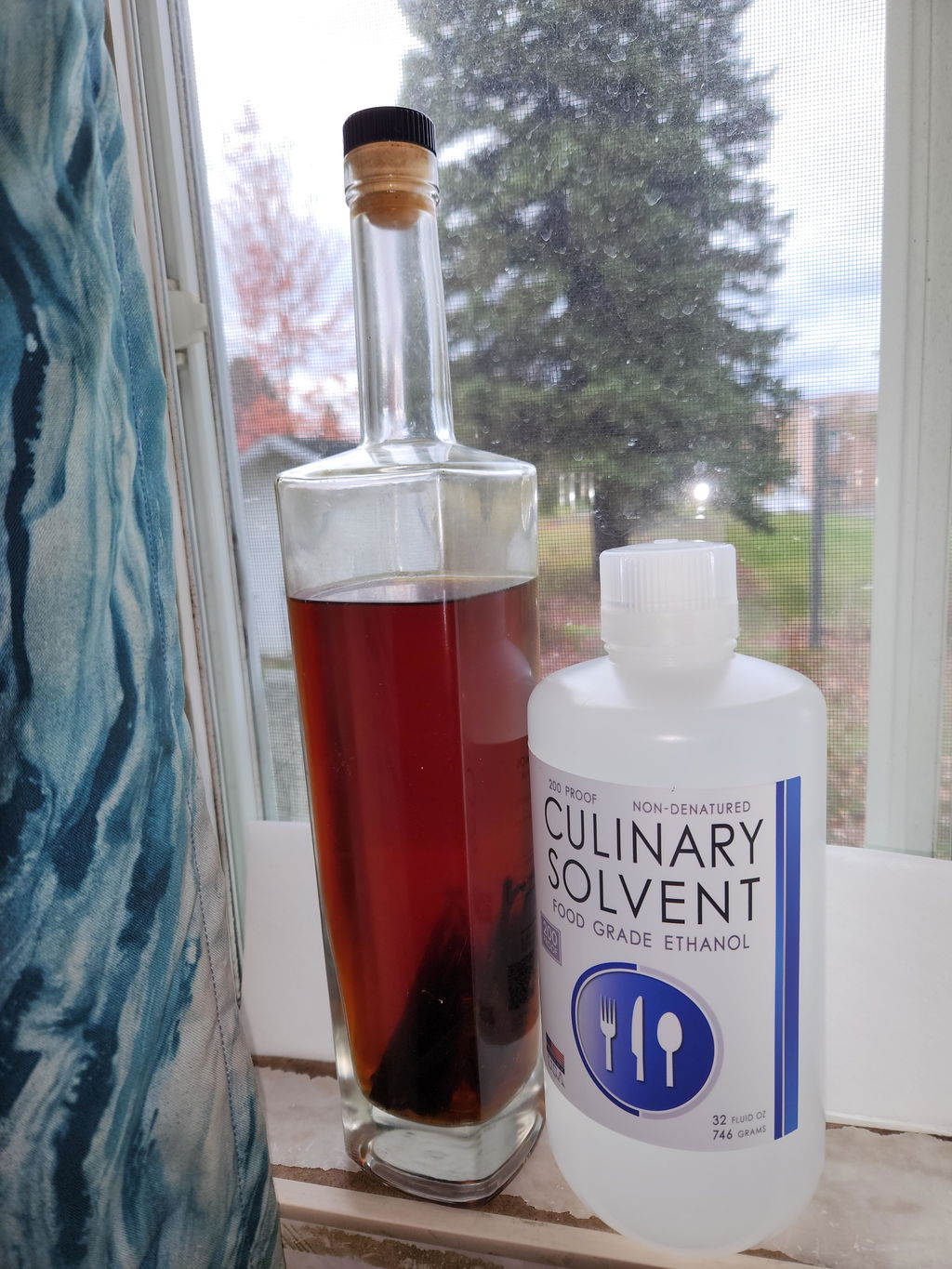

Homemade Ginseng Tincture and Extract Recipe

Ginseng is a well-known botanical root with a long history in traditional herbal preparations. A homemade ginseng tincture or extract turns the dense root into a liquid preparation that is easier to measure, blend, and store for educational herbal projects.
This guide explains how to make a ginseng tincture using dried Panax root and an 80 proof ethanol-water menstruum prepared from USDA Certified Organic 200 Proof Food Grade Ethanol. Ginseng root is not best handled with straight 200 proof ethanol. A lower-proof menstruum gives the recipe both ethanol and water, which better fits the root’s mixed compound profile.
What is Ginseng?
Ginseng refers to roots from the Panax genus. The two most familiar forms are Asian ginseng, commonly associated with Panax ginseng, and American ginseng, commonly associated with Panax quinquefolius. Both are valued as distinctive roots with an earthy, slightly bitter taste and a long history in traditional botanical preparation.
For tincture making, the relevant plant part is the root. Ginseng root may be sold whole, sliced, dried, cured, red, white, cultivated, woods-grown, or wild-simulated depending on the source and species. This recipe focuses on dried ginseng root because it is the most practical format for many home extract makers.
Ginseng root contains compound groups often discussed in extraction, including ginsenoside glycosides, polysaccharides, peptides, sugars, less-polar ginsenosides, polyacetylenes, and small amounts of volatile constituents. Because these compound groups do not all behave the same way in alcohol, this recipe uses an ethanol-water menstruum rather than straight 200 proof ethanol.
Why Make Ginseng Tincture or Extract?
A ginseng tincture gives you a liquid way to work with a dense botanical root. Whole or sliced ginseng root can be slow to prepare directly, while a tincture allows the root to macerate ahead of time and be stored in a compact bottle.
Ginseng has a long history in traditional botanical preparations. Asian ginseng is especially associated with Chinese and Korean herbal traditions, while American ginseng has its own history in North American and Chinese trade and herbal use. This historical context is included for background only and should not be read as a medical claim.
For herbalists, apothecaries, and DIY makers, ginseng root is a useful example of why root tinctures need proof selection. The root includes both water-friendly and alcohol-friendly constituents, so a balanced menstruum is more appropriate than a one-size-fits-all 200 proof recipe.
Where Does Ginseng Grow?
Asian ginseng is associated with East Asia, especially Korea, northeastern China, and nearby regions. American ginseng is native to eastern North America and is also cultivated commercially. Both types are commonly sold as dried root through herbal suppliers, apothecaries, specialty ingredient sellers, and traditional herb shops.
Wild ginseng is heavily regulated or protected in many places. This article is not a wild-harvesting guide. For home tincture making, purchased dried root from a reputable supplier is the safer and more practical choice. Look for clear labeling that identifies the species, root type, growing method, and source whenever possible.
Sourcing and Selecting Quality Ginseng Root
Choose ginseng root from a reputable herb supplier, apothecary, or botanical ingredient seller. The product should clearly identify the material as Panax root and, ideally, list the species, such as Panax ginseng or Panax quinquefolius. Avoid vague products that only say “ginseng” without enough information to understand what root is being purchased.
Good dried ginseng root should smell earthy, clean, and characteristic of the root type. It may be sold as whole roots, slices, chips, or coarse pieces. Avoid root that smells musty, moldy, smoky in an unpleasant way, damp, or stale. Also avoid material with visible mold, excessive dust, or unclear sourcing.
Wild American ginseng has conservation and legal concerns in many areas. If using American ginseng, consider cultivated, woods-grown, or legally sourced material from a supplier that provides clear sourcing information. Quality and traceability matter because the finished tincture can only reflect the root material used.
Preparing Ginseng Root for Extraction
Dried ginseng root should be sliced, chipped, or lightly broken before extraction. Smaller pieces expose more surface area to the menstruum and allow the liquid to work more evenly through the dense root.
If the root is already sliced or chipped, it can usually be used as-is. If the pieces are thick, break or cut them into smaller pieces before weighing. Avoid grinding ginseng into a fine powder unless you are prepared for slower straining, heavier sediment, and more liquid loss during filtering.

Choosing the Right Menstruum
The menstruum is the liquid used to extract compounds from the plant material. For ginseng root, the recommended menstruum is 80 proof, or 40% ABV.
This lower-proof menstruum is useful because ginseng root contains a strong water-friendly fraction, including ginsenoside glycosides, polysaccharides, peptides, and sugars. Ethanol is still important because it supports extraction of less water-friendly constituents, including less-polar ginsenosides, polyacetylenes, and other alcohol-friendly root components.
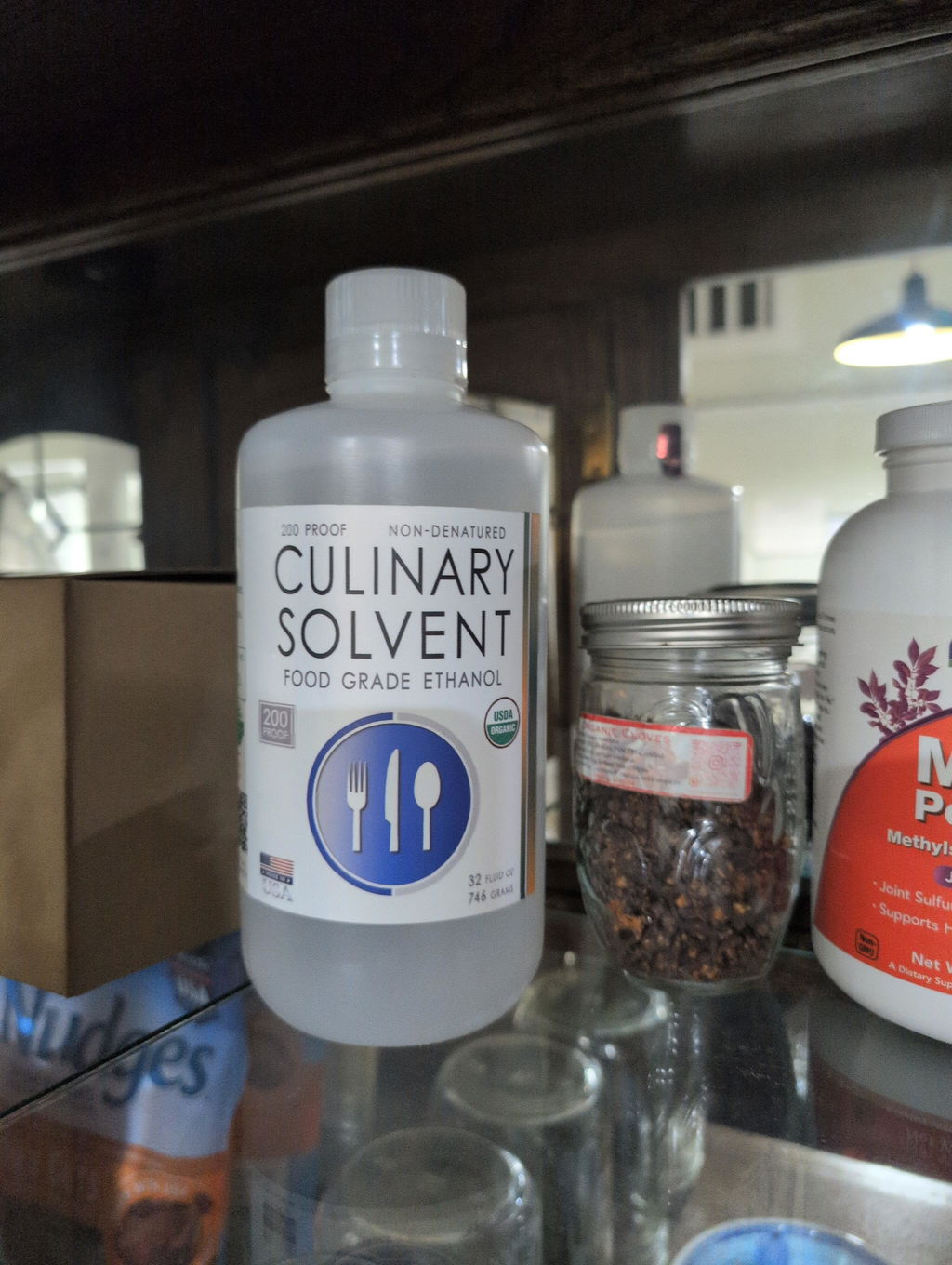
Starting with USDA Certified Organic 200 Proof Food Grade Ethanol gives you a clean high-proof starting point that can be diluted accurately to the target strength. For more help with dilution, see this guide to dilute your 200 proof ethanol for tincture recipes.
Why 80 Proof Works for Ginseng Root
80 proof, or 40% ABV, works well for ginseng root because it gives the finished menstruum more water than alcohol while still preserving a meaningful ethanol fraction. This is helpful for a dense root that contains many glycoside and polysaccharide-type constituents, along with some less water-friendly compounds.
Using 200 proof ethanol undiluted would make the extraction too alcohol-heavy for this root and would reduce the role water plays in drawing out water-friendly constituents. A much lower alcohol strength may not provide enough ethanol for a balanced tincture. An 80 proof menstruum is a practical target for dried Panax root extraction.
Recommended Ingredient-to-Menstruum Ratio
The recommended ginseng root tincture ratio is 1:5. That means 1 part dried ginseng root by weight to 5 parts finished menstruum by volume. For an 8 fl oz batch, use 1.6 oz dried ginseng root by weight.
| Ingredient State | Plant Part | Ratio | Amount for 8 fl oz Menstruum | Target ABV |
|---|---|---|---|---|
| Dried or cured | Panax root | 1:5 | 1.6 oz dried ginseng root by weight | 40% ABV, 80 proof |
The ratio applies to finished menstruum volume, not ethanol volume alone. For this recipe, the finished 8 fl oz menstruum is made from 3.2 fl oz of 200 proof ethanol plus 4.8 fl oz of water.
How to Prepare 8 fl oz of 80 Proof Menstruum
To make 8 fl oz of 80 proof menstruum from 200 proof food grade ethanol, combine 3.2 fl oz of 200 proof ethanol with 4.8 fl oz of water. This produces 8 fl oz of 40% ABV menstruum before the ginseng root is added.
| Final Menstruum Volume | Target Strength | 200 Proof Food Grade Ethanol | Water |
|---|---|---|---|
| 8 fl oz | 80 proof, 40% ABV | 3.2 fl oz | 4.8 fl oz |
Measure carefully and mix the ethanol and water before adding the menstruum to the ginseng root. Use clean water suitable for food preparation. When ethanol and water are mixed, the liquid may warm slightly and the final volume can contract a little. For small home tincture batches, careful measuring remains a practical approach.
Recipe Execution
Ingredients
- 1.6 oz dried ginseng root by weight, sliced, chipped, or lightly broken
- 3.2 fl oz USDA Certified Organic 200 Proof Food Grade Ethanol
- 4.8 fl oz water
Equipment
- Clean glass jar with a tight-fitting lid
- Kitchen scale
- Liquid measuring tools
- Knife, cutting board, or tool for breaking dense root pieces
- Stirring utensil
- Fine mesh strainer, reusable filter bag, or coffee filter
- Amber glass bottle for finished storage
Steps
- Weigh 1.6 oz of dried ginseng root.
- Slice, chip, or lightly break the root into smaller pieces to increase surface area.
- Measure 3.2 fl oz of 200 proof food grade ethanol.
- Measure 4.8 fl oz of water.
- Combine the ethanol and water to make 8 fl oz of 80 proof menstruum.
- Place the prepared ginseng root into a clean glass jar.
- Pour the 80 proof menstruum over the root until the plant material is fully covered.
- Seal the jar tightly and shake gently.
- Store the jar in a cool, dark place during maceration.
- Shake the jar periodically to keep the root in contact with the menstruum.
- After maceration, strain through a fine mesh strainer, reusable filter bag, or coffee filter.
- Transfer the finished tincture to amber glass and label it with the ingredient, ratio, proof, and date.
:recipekit:
Storage Best Practices
Store finished ginseng tincture in amber or other UV-protective glass, away from heat and direct sunlight. A cool cabinet or pantry is a good choice. Keep the bottle tightly sealed to reduce evaporation and limit air exposure.
Clear glass can be used during maceration if the jar is kept away from sunlight. For finished storage, amber glass is preferred. Some sediment may settle in the bottle over time, especially if small root particles pass through the filter. Let the bottle sit upright and decant carefully if you want a clearer pour.
For more information about safe handling and storage, see these Storage tips for food grade ethanol.
Final Thoughts
Ginseng root is a useful example of why root tinctures should not automatically be made with straight 200 proof ethanol. The root contains both water-friendly and alcohol-friendly compound groups, so an 80 proof ethanol-water menstruum is a better fit for this preparation.
For the most practical home recipe, use dried Panax root at a 1:5 ratio with 8 fl oz of finished 80 proof menstruum. With correctly identified root material, careful dilution, and proper storage, homemade ginseng tincture can be a useful addition to educational and botanical extract projects.
Shop Food Grade Ethanol for Ginseng Tincture
Ready to make homemade ginseng tincture? Start with USDA Certified Organic 200 Proof Food Grade Ethanol from Culinary Solvent and dilute it to 80 proof for this ginseng root extraction recipe.