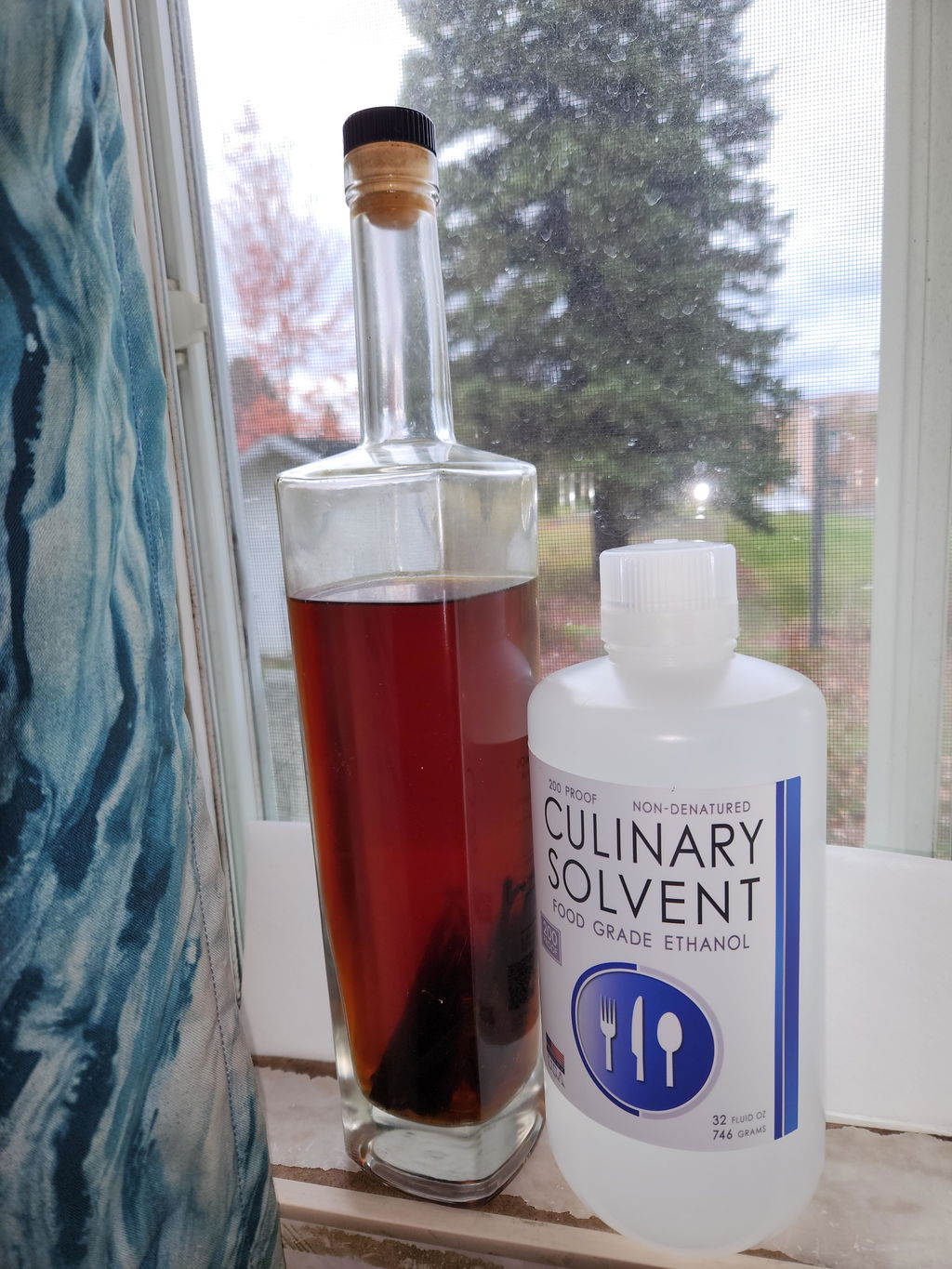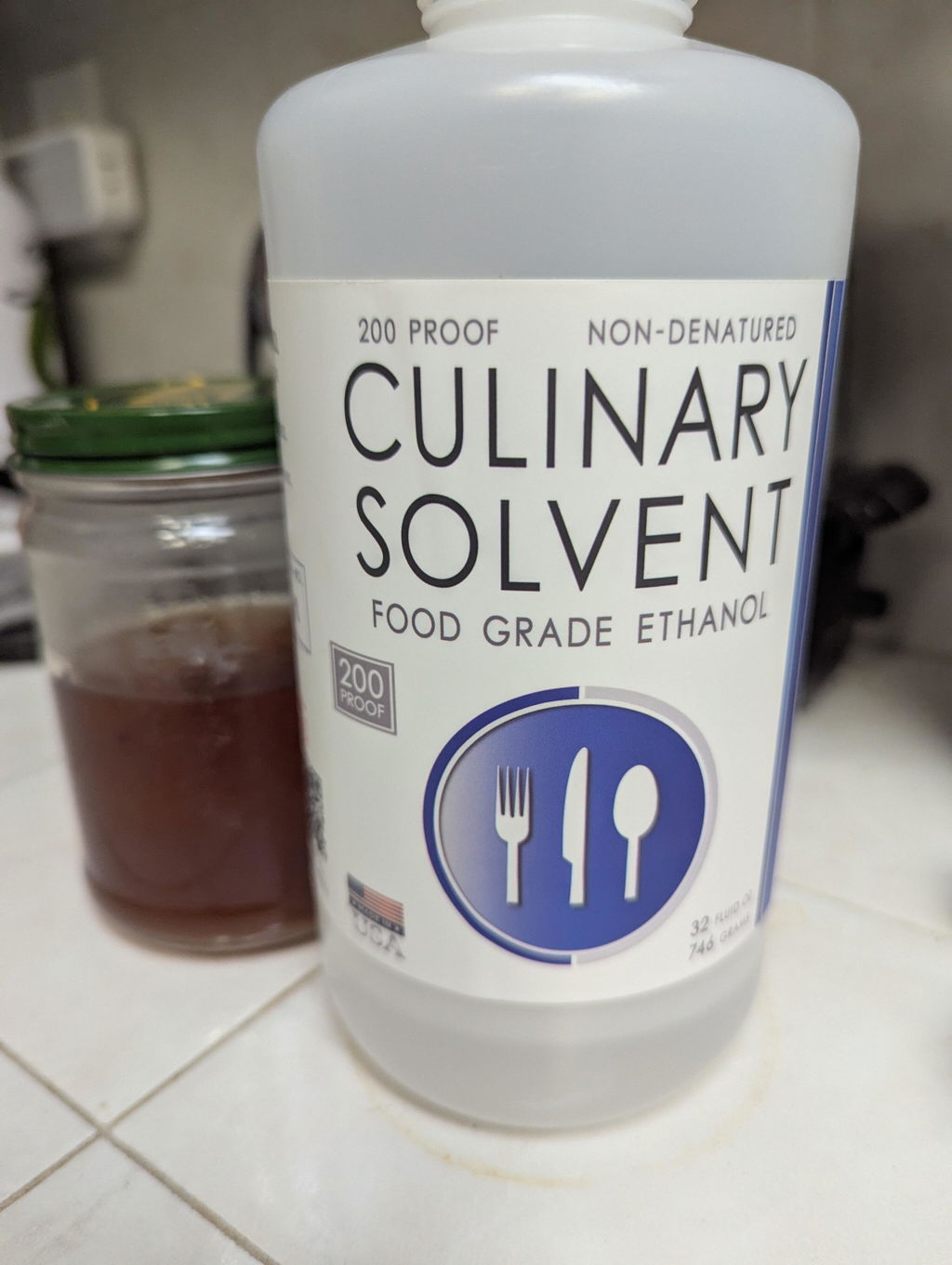

Homemade Basil Tincture and Extract Recipe using Food Grade Ethanol

Basil is a fragrant culinary herb known for its sweet, peppery, slightly spicy aroma. A homemade basil tincture or extract turns the herb’s fresh green character into a liquid preparation that is easy to measure, blend, and store for culinary, botanical, and DIY extract projects.
This guide explains how to make a basil tincture using dried Ocimum basilicum tops and a 90 proof ethanol-water menstruum prepared from 200 Proof Food Grade Ethanol. Basil is not best handled with straight 200 proof ethanol. A 90 proof menstruum gives the recipe both ethanol and water, which better fits basil’s mix of aromatic, alcohol-friendly compounds and water-friendly plant constituents.
What is Basil?
Basil (Ocimum basilicum) is an aromatic herb in the Lamiaceae family, the same plant family that includes mint, rosemary, sage, thyme, and oregano. Sweet basil is one of the best-known culinary basils, but there are many cultivars with different aroma profiles, including Genovese basil, Thai basil, lemon basil, cinnamon basil, and purple basil.
For tincture making, the relevant plant part is the aerial top of the plant, especially the leaves and tender flowering tops. Basil contains aromatic essential oil constituents, including linalool, eugenol, estragole, and related compounds, along with water-friendly constituents such as rosmarinic acid, caffeic acid, flavonoid glycosides, tannins, and polysaccharides. Because these compound groups do not all behave the same way in alcohol, this recipe uses an ethanol-water menstruum rather than straight 200 proof ethanol.
Why Make Basil Tincture or Extract?
A basil tincture gives you a liquid way to preserve and work with basil’s familiar herbal aroma. Fresh basil is excellent in the kitchen, but it wilts quickly and can vary in strength from bunch to bunch. A tincture or extract offers a concentrated format that can be measured and blended into small-batch culinary and botanical projects.
Basil has a long history in culinary and traditional botanical use across many regions. This history is included as background only and should not be read as a medical claim. This recipe is written for educational, culinary, and botanical preparation purposes.
For herbalists, apothecaries, chefs, and DIY makers, basil is a useful example of why proof selection matters. Its aromatic oils benefit from ethanol, while its phenolic acids, tannins, and other water-friendly constituents benefit from the water portion of the menstruum.
Where Does Basil Grow?
Basil is native to tropical and subtropical regions and is now cultivated around the world as a culinary herb. It thrives in warm weather, bright sun, and well-drained soil, which is why it is widely grown in home gardens, farms, greenhouses, and culinary herb operations.
In the United States, basil is commonly grown in warm-season gardens and in commercial herb production. For tincture making, the growing region matters less than correct identification, clean handling, strong aroma, and proper drying.

Sourcing and Selecting Quality Basil
Choose basil from a reputable herb supplier, farmers market, culinary herb grower, apothecary, or home garden. The best material should be correctly identified as Ocimum basilicum, strongly aromatic, clean, and free from mold, excess dust, or signs of poor storage.
For dried basil, look for leaves or cut herb that still carries a clear sweet basil aroma. The color should be green to olive-green rather than brown, gray, or faded. For fresh basil, choose leaves and tender tops that are fragrant, vibrant, and free from yellowing, wilting, black spots, or decay.
Dried basil is used as the main recipe here because it is easy to weigh, easy to store, and practical for repeatable home tincture batches. Fresh basil can also be used, but it contains more natural water and may require a different ratio depending on the recipe goal.
Preparing Basil for Extraction
For this main recipe, use dried basil tops or leaves. Lightly crumble or chop the dried basil before extraction so the menstruum can contact more surface area. Avoid grinding the herb into a fine powder, since powder is harder to strain and may leave more sediment in the finished tincture.
If using fresh basil instead, rinse only if needed, dry the leaves thoroughly, and chop the fresh tops before maceration. Fresh basil should be handled gently because bruising, heat, and prolonged exposure to air can flatten its aroma.
Choosing the Right Menstruum
The menstruum is the liquid used to extract compounds from the plant material. For basil, the recommended menstruum is 90 proof, or 45% ABV.
This strength gives the recipe both ethanol and water. Ethanol helps extract aromatic and alcohol-friendly constituents such as essential oil compounds and some flavonoid aglycones. Water helps support extraction of rosmarinic acid, caffeic acid, flavonoid glycosides, tannins, mucilage, and other water-friendly components.
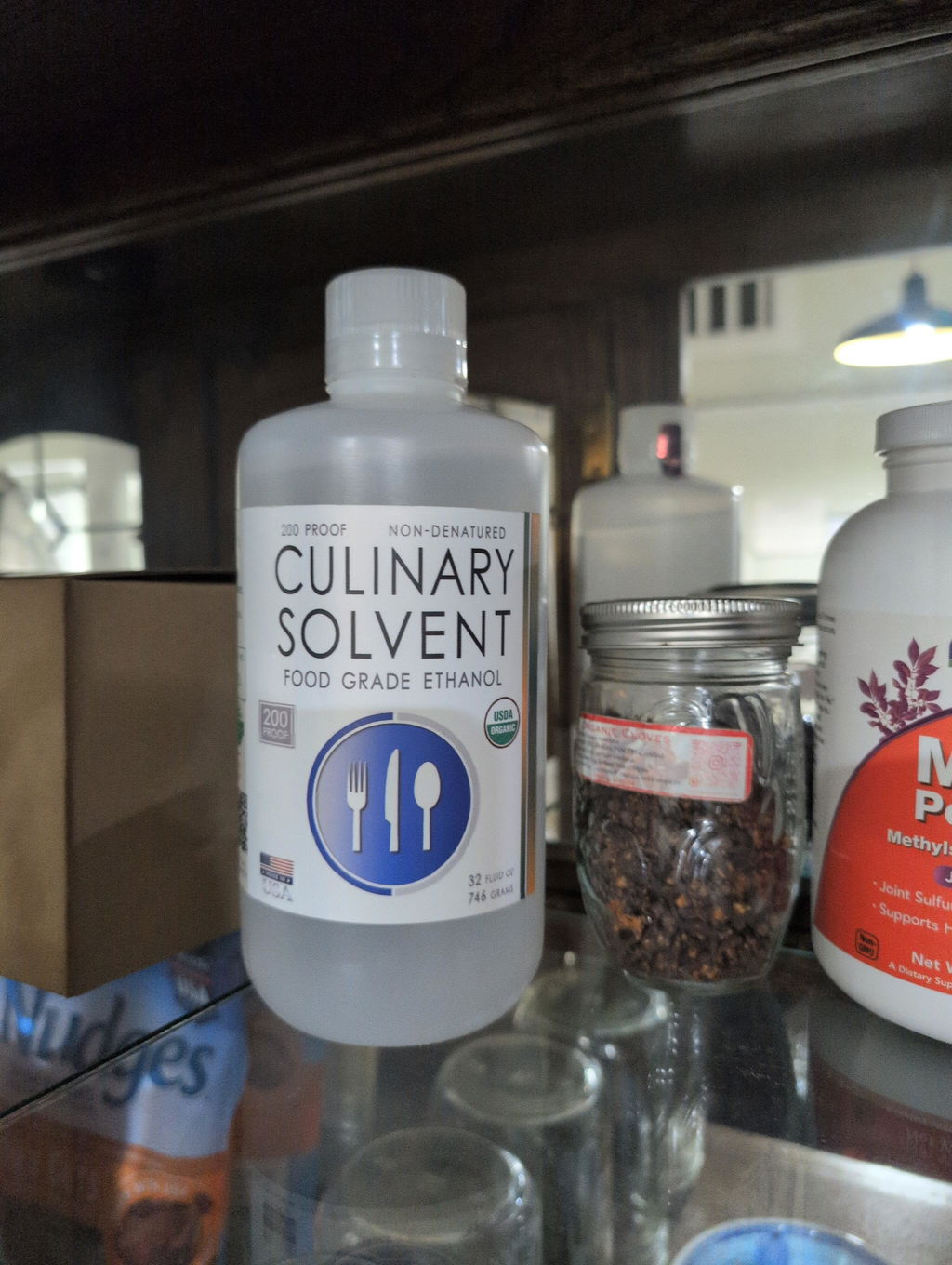
Starting with 200 Proof Food Grade Ethanol gives you a clean high-proof starting point that can be diluted accurately to the target strength. For more help with dilution, see this guide to dilute your 200 proof ethanol for tincture recipes.
Why 90 Proof Works for Basil
90 proof, or 45% ABV, works well for basil because it gives the finished menstruum enough ethanol to capture the herb’s aromatic character while still including enough water to support extraction of water-friendly plant compounds.
Using 200 proof ethanol undiluted would make the extraction too alcohol-heavy for this leafy herb. Using a much lower proof could reduce the solvent’s ability to capture basil’s aromatic and oil-forward character. A 90 proof menstruum is a practical middle ground for dried basil tops and leaves.
Recommended Ingredient-to-Menstruum Ratio
The recommended basil tincture ratio is 1:5. That means 1 part dried basil by weight to 5 parts finished menstruum by volume. For an 8 fl oz batch, use 1.6 oz dried basil tops or leaves by weight.
| Ingredient State | Plant Part | Ratio | Amount for 8 fl oz Menstruum | Target ABV |
|---|---|---|---|---|
| Dried | Tops or leaves | 1:5 | 1.6 oz dried basil by weight | 45% ABV, 90 proof |
The ratio applies to finished menstruum volume, not ethanol volume alone. For this recipe, the finished 8 fl oz menstruum is made from 3.6 fl oz of 200 proof ethanol plus 4.4 fl oz of water.
How to Prepare 8 fl oz of 90 Proof Menstruum
To make 8 fl oz of 90 proof menstruum from 200 proof food grade ethanol, combine 3.6 fl oz of 200 proof ethanol with 4.4 fl oz of water. This produces 8 fl oz of 45% ABV menstruum before the basil is added.
| Final Menstruum Volume | Target Strength | 200 Proof Food Grade Ethanol | Water |
|---|---|---|---|
| 8 fl oz | 90 proof, 45% ABV | 3.6 fl oz | 4.4 fl oz |
Measure carefully and mix the ethanol and water before adding the menstruum to the basil. Use clean water suitable for food preparation. When ethanol and water are mixed, the liquid may warm slightly and the final volume can contract a little. For small home tincture batches, careful measuring remains a practical approach.
Recipe Execution
Ingredients
- 1.6 oz dried basil tops or leaves by weight, lightly crumbled
- 3.6 fl oz 200 Proof Food Grade Ethanol
- 4.4 fl oz water
Equipment
- Clean glass jar with a tight-fitting lid
- Kitchen scale
- Liquid measuring tools
- Stirring utensil
- Fine mesh strainer, reusable filter bag, or coffee filter
- Amber glass bottle for finished storage
Steps
- Weigh 1.6 oz of dried basil tops or leaves.
- Lightly crumble or chop the basil to increase surface area, but do not grind it into powder.
- Measure 3.6 fl oz of 200 proof food grade ethanol.
- Measure 4.4 fl oz of water.
- Combine the ethanol and water to make 8 fl oz of 90 proof menstruum.
- Place the prepared basil into a clean glass jar.
- Pour the 90 proof menstruum over the basil until the herb is fully covered.
- Seal the jar tightly and shake gently.
- Store the jar in a cool, dark place during maceration.
- Shake the jar periodically to keep the herb in contact with the menstruum.
- After maceration, strain through a fine mesh strainer, reusable filter bag, or coffee filter.
- Transfer the finished tincture to amber glass and label it with the ingredient, ratio, proof, and date.
:recipekit:
Storage Best Practices
Store finished basil tincture in amber or other UV-protective glass, away from heat and direct sunlight. A cool cabinet or pantry is a good choice. Keep the bottle tightly sealed to reduce evaporation and limit air exposure.
Clear glass can be used during maceration if the jar is kept away from sunlight. For finished storage, amber glass is preferred. Some sediment may settle in the bottle over time, especially if the basil was crumbled finely. Let the bottle sit upright and decant carefully if you want a clearer pour.
For more information about safe handling and storage, see these Storage tips for food grade ethanol.
Culinary and DIY Uses for Basil Extract
Homemade basil extract can be used in small amounts where a concentrated basil note is useful. It can complement sauces, marinades, salad dressings, savory syrups, herbal beverages, and kitchen experiments where fresh basil is not available or where a liquid extract is easier to blend.
Basil extract can also be used in aroma-focused DIY projects where a green herbal note is wanted. If using basil extract in topical or personal care formulas, dilute properly and consult a qualified formulator or professional before use.
Final Thoughts
Basil is a useful example of why leafy herb tinctures should not automatically be made with straight 200 proof ethanol. The herb contains both aromatic, alcohol-friendly compounds and water-friendly constituents, so a 90 proof ethanol-water menstruum is a better fit for this preparation.
For the most practical home recipe, use dried basil tops or leaves at a 1:5 ratio with 8 fl oz of finished 90 proof menstruum. With clean herb material, careful dilution, and proper storage, homemade basil tincture can be a useful addition to culinary, botanical, and DIY extract projects.
Shop Food Grade Ethanol for Basil Tincture
Ready to make homemade basil tincture? Start with 200 Proof Food Grade Ethanol from Culinary Solvent and dilute it to 90 proof for this basil extraction recipe.